After Months of Drama, Pinellas Juvenile Welfare Board to Start CEO Search Over

Five months into a contentious CEO search and three hours into a monthly meeting, the Juvenile Welfare Board of Pinellas County decided Thursday that it would not move forward with installing Glen Gilzean as its next leader.

Since January, the special district funded by taxpayer dollars has seen infighting between board members and threats of legal action from the interim CEO’s lawyer.

Gilzean, a popular appointee of Gov. Ron DeSantis who was accused of misspending millions in his last appointment, was a front-runner for CEO alongside the interim, Mike Mikurak. In April, the board voted 6-5 to select Gilzean. A second vote was required before the selection became official.

On Thursday, the board ultimately voted to cancel the vote and start the search from scratch. Chief Operating Officer Karen Boggess was appointed as the new interim CEO.

The 11-member board is made up of county officials and gubernatorial appointees who are responsible for deciding how to allocate the $100 million annual budget to fund programs supporting children and families.

Here’s how Thursday’s meeting played out:

Motion to call off the search

Mikurak retained a lawyer who alleged that gubernatorial appointee Renee Chiea defamed Mikurak at a February meeting when she said the board had misspent money years ago when he was a board member.

His lawyer, Shane Vogt, threatened to sue over her comments and, more broadly, over how the CEO search was conducted.

He sent a demand letter to the board in late March seeking records from board members’ phones.

Those records revealed that Brian Aungst Jr., a gubernatorial appointee, had texted several prominent Republicans around the state about how votes for Gilzean were “gettable” from county officials and that he would “get it done.”

On April 29, Vogt sent a settlement proposal to the board that would entail calling off the CEO search and starting over.

Vogt spoke about the settlement at Thursday’s meeting. Chiea’s lawyer, Luke Lirot, refuted the claim that defamatory comments were made and encouraged the board to vote as they wished.

Public Defender Sara Mollo — who was the tiebreaker at the April vote — proposed a motion to conduct a second vote for Gilzean.

Before the vote, Pinellas schools Superintendent Kevin Hendrick said he still believed the board should start over.

“No. 1, I am not interested in this becoming a political process. I said that months ago, and it clearly has,” he said. “This should be about supporting kids. The public records we have seen show the nature of how involved this has become behind the scenes. We should be embarrassed for that.”

Aungst then came out with a change of heart by calling for a motion to cancel the second vote and start a search from scratch with the help of a contracted search firm.

“We still don’t have consensus, and the community doesn’t have consensus,” he said. “I’m concerned about the organization. I don’t want meetings like this; we never used to have them.”

Gubernatorial appointee Melissa Rutland, who previously voted for Gilzean, said she agreed with Aungst and supported adding candidates to the search.

The motion passed by a vote of 5-4, with Mollo and gubernatorial appointees Chiea, Alicia McShea and Kristen Gnage voting against and Rutland and Aungst voting in favor. They were joined by Pinellas County Commissioner Chris Latvala, Circuit Judge Patrice Moore and board chairperson Jim Millican, who is also a gubernatorial appointee. (Hendrick had to leave the meeting for another obligation. State Attorney Bruce Bartlett was out of town.)

Question of who would serve as interim CEO

After it was decided that the search would start over, some board members expressed discomfort with Mikurak remaining the interim because of the settlement terms.

The offer asked that Mikurak be compensated $50,000 to resolve the civil claims against Chiea. It also asked for $50,000 in attorneys’ fees.

Mikurak said he would “take my demand off the table as long as we can move forward and put the children first.”

Aungst moved to extend Mikurak’s contract, but the motion was denied 4-5.

Mollo then suggested Boggess for the interim position.

Boggess has been with the organization for 20 years and took a minute to collect herself before responding.

“I live in this community. I’m a parent, I’m a taxpayer, I love the work that we get to do here,” she said tearfully. “The staff here do so much, and I would be honored to help give stability to this organization.”

The motion passed, with Chiea being the only “no.”

What community members had to say

Pinellas County Commissioner René Flowers was one of several community members to weigh in with support for the vote being canceled during public comment.

“Tallahassee has never put its finger or foot on the pedal … they never got involved in this process,” she said. “I strongly encourage you to start this process over so that those who are serving in the community, those who are working under JWB, know exactly what they’re getting.”

Linda Lerner, who spent three decades on the Pinellas County School Board and sat next to Gilzean when he served for a year in 2012, said she was concerned that there wasn’t more discussion about the allegations of his misspending as the Orange County supervisor of elections.

“The facts, as I have seen reported, was that he spent $9.9 million without approval, and one weekend he spent $4.3 million and left his office without enough money to pay employees,” she said. “He is accused of breaking many Florida statutes.”

Gilzean has denied the allegations against him and filed a lawsuit against the county that he dropped when he left office in January 2025.

Others spoke in support of Gilzean, including Mike Sutton, CEO of Habitat for Humanity Tampa Bay Gulfside.

Sutton said he told Gilzean to apply for CEO, not the governor’s office. The Tampa Bay Times has reported several stories about the CEO search controversy this year.

“I’ll say that one more time for our friends at the Tampa Bay Times so they can properly report on it for their last 12 readers who are still standing,” he said. “Glen has been professionally transparent all along the way.”

Sutton and Gilzean did not respond to requests for interviews.

The meeting was adjourned after nearly four hours. An update on the new CEO search will be heard at the next meeting, June 25.

Read the article as originally published at https://www.tampabay.com/news/pinellas/2026/05/21/pinellas-juvenile-welfare-board-ceo-search/

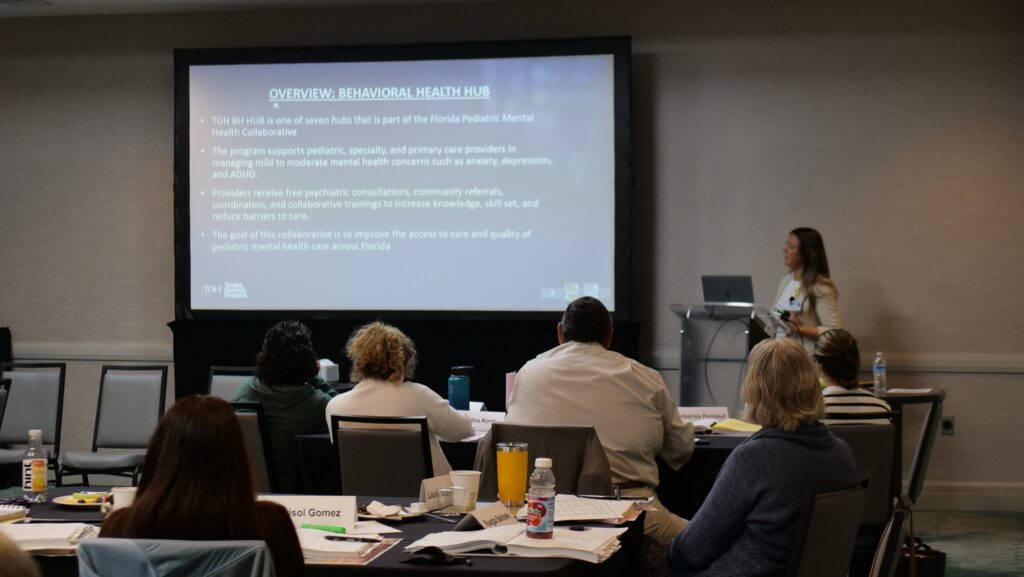
CMHI Hosts REACH Institute Training for Pinellas Pediatric Professionals

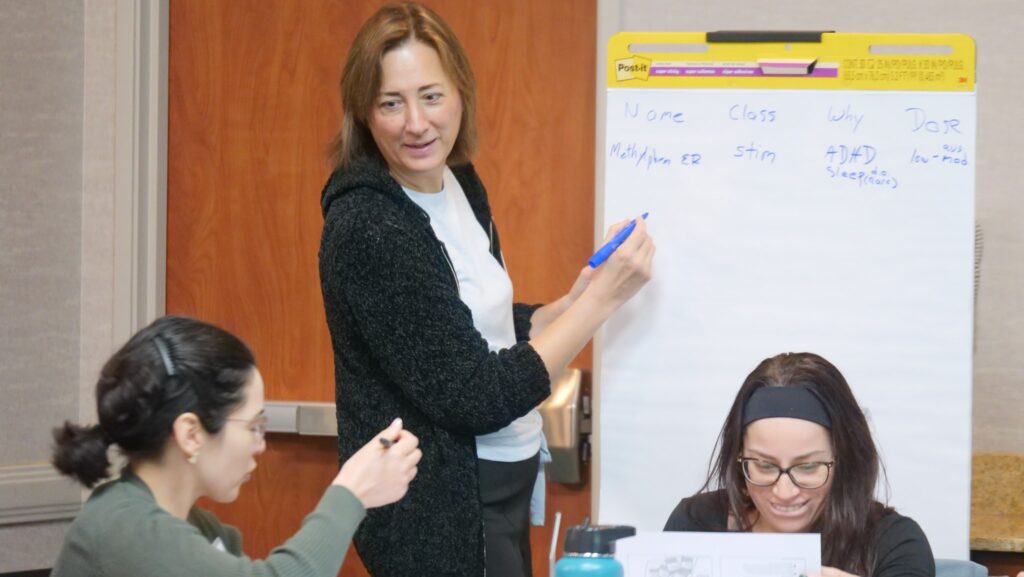
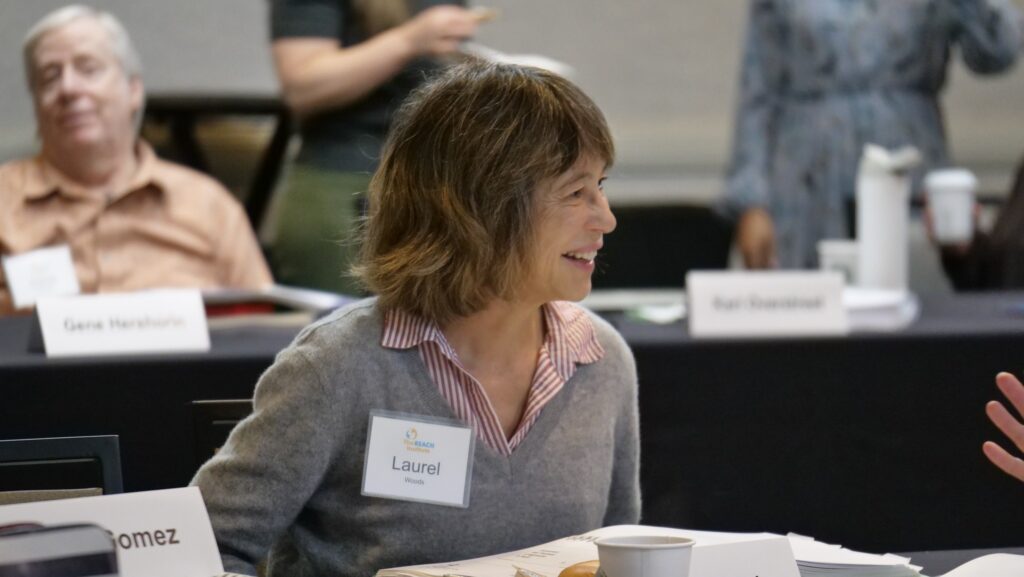
JWB’s Children’s Mental Health Initiative (CMHI) made it possible for 20 local pediatric professionals to participate in the REACH Institute’s Patient-Centered Mental Health in Pediatric Primary Care mini fellowship from January 23-25 at the Hilton St. Petersburg Carillon Park.  

The comprehensive, in-person, 16-hour training is designed to help pediatricians increase their comfort and skills in assessing, diagnosing, and treating low to moderate pediatric mental health conditions in their respective pediatric practices. Over four additional months, the pediatricians will also participate in a case-based distance learning program with national primary care and child/adolescent psychiatry experts to learn to manage pediatric mental health issues encountered in daily practice. 

The goal is to help these medical professionals correctly identify pediatric health problems such as childhood depression, ADHD, bipolar disorder, anxiety states (including PTSD), oppositional and conduct disorders, and psychosis. They will then be able to create and implement a treatment plan including selecting medications and mobilizing existing resources like family members, school personnel, and other professional caregivers—all while serving patients in their pediatric practice where families and children already feel safe and secure. 

Bringing this three-day REACH Institute training to our community supports CMHI’s commitment to creating a high-quality, service-integrated system of care in Pinellas County that focuses on prevention, early detection, and early intervention for children and families. 

See more photos from the training on Facebook.  

JWB Hosts 2025 OST Conference: Teaming Up 4 Youth

On Saturday, September 20, JWB proudly hosted the 6th Annual Out-of-School-Time (OST) Conference, with the theme “Teaming Up 4 Youth!” It was a high-energy, inspirational day for the 325-plus dedicated attendees from JWB-funded OST, literacy, and Neighborhood Family Center programs. The conference had a joyful pep rally feeling  while also providing valuable professional and personal development tools.  

DJ Corey Thornton kept the energy high throughout the day with fun tunes, and there was plenty of delicious food between speakers and during lunch. The day centered around three incredible keynote speakers — Gaelin Elmore, Barb Clark, and Chase Mielke — who delivered deeply personal and powerful messages that reminded everyone in the room of the profound impact the OST staff has on youth.   

JWB COO Karen Boggess shared these takeaways:  

  1. “When a young person least deserves your love is when they need it the most.” 
    Our consistency, empathy, and presence can make all the difference—even when it goes unspoken. Sometimes, it’s the quietest moments that mean the most. 
  1. “Belonging is everything.” 
    Every young person—like every adult—craves connection and inclusion. We may never fully understand what they’re carrying, but we can create spaces where they feel seen, heard, and safe. 
  1. “If you’ve told a child a thousand times and they still haven’t learned, it’s not the child who’s the slow learner.” 
    These words challenge us to shift our lens, deepen our understanding, and collaborate more intentionally. Meeting youth where they are—and working together to support them—requires both humility and heart. 

Thanks to the exceptional leadership of the OST Conference Planning Committee, JWB staff volunteers, and provider partners, the planning, preparation, and passion that went into every detail were evident—and deeply appreciated. Overall, the event was a massive success for JWB and the hard-working out-of-school-time staff who do so much for students in Pinellas County throughout the year! 

Check out more photos from the event on Facebook. 

Meal Mobile Rolls Out Summer Nutrition Across Pinellas

JWB Community Collaborations Coordinator Cristen Curley shares how the Meal Mobile began, partnered with the JWB Book Bus, and made a significant impact, providing shelf-stable food to families in Pinellas during the summer. 

One of the main goals of the Childhood Hunger Initiative (CHI) is to fill gaps in food access when school is out since students no longer have access to regular school meals during those times. The largest of these gaps is during summer break. In 2025, the issue was especially pressing because Pinellas County Schools significantly reduced eligibility for Summer Bridge programs, further limiting students’ access to meals.  

In 2024, JWB partnered with several food banks to distribute food through drive-up mobile pantries. While these pantries were successful and all food was distributed, we recognized the need to further increase accessibility – especially in the wake of Hurricanes Helene and Milton, which left many vulnerable community members unhoused.  

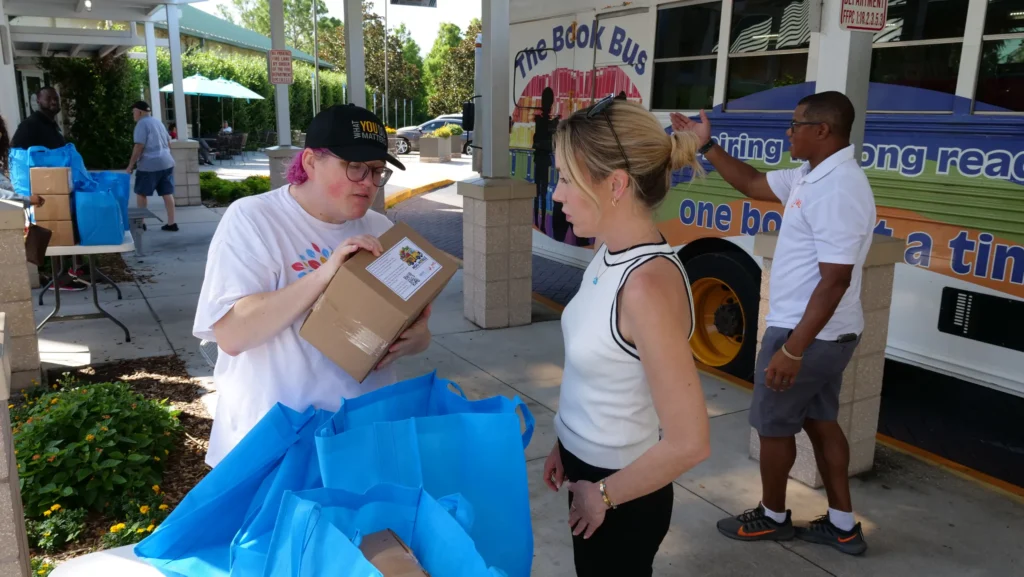
In response, the collective began looking for ways to bring food directly to communities. Shaina Bent, former COO of the St. Pete Free Clinic (SPFC) and former Chair of the CHI, suggested having an SPFC food truck follow the Book Bus, and thus, the Meal Mobile was born!    

Cristen Curley and Kati Blaxberg review shelf stable foods

JWB has a long-standing collaborative history with SPFC, both as a funded agency and through our former CEO Beth Houghton, who previously served as SPFC’s CEO. This made the partnership a natural fit and an extension of our shared work.  

Since the Book Bus sites had already been confirmed, I reached out to each site to discuss plans for bringing food onsite. Every site I spoke with was enthusiastic about the idea and excited to offer food to the families they serve.  

During this time, we also worked with SPFC and their vendors to determine the contents of the shelf-stable boxes and produce offerings. Ultimately, the produce included apples and oranges, and the boxes contained canned vegetables, fruit, beans, chicken, tuna, applesauce, pasta, peanut butter, macaroni and cheese, and cereal bars. We also secured a generous donation of spices from Penzey’s Spices to enhance the produce offerings. Additionally, each food box included a magnet with a QR code linking to the SPFC Food Pantry Map (which JWB funds).  

While many sites opted for the drop-off method, where SPFC staff left boxes for children to take home at pickup, several public-facing sites allowed us to distribute food directly to patrons. 

St. Pete Free Clinic truck with book bus

Future plans for the Meal Mobile will depend on debriefs with both our community partners and SPFC. Our goals include streamlining delivery and distribution processes, ensuring sites are well-equipped to participate, and expanding to more locations. Ideally, we’d love for every Book Bus stop to include food distribution. With that in mind—and staying focused on accessibility and high-impact outreach—we’ll be working with Jomar Lopez, Senior Strategic Researcher, to evaluate our efforts and use the Child Opportunity Index (COI) to ensure impact and meeting of goals. 

JWB’s Childhood Hunger Initiative works year-round to fill in the gaps for hungry kids. To learn more, visit jwbpinellas.org/childhood-hunger/.

Pinellas County Peacemakers Program Teaches Youth Peaceful Alternatives to Conflict

Community Action Stops Abuse, or CASA, offers the Peacemakers Program to area schools and other youth programs to teach kids about peaceful alternatives to conflict.

“We go into the schools and we teach kids what it looks like to be in a healthy relationship,” said CASA CEO Lariana Forsythe. “So it’s age appropriate, we start with pre-schoolers and kindergarteners and we talk about healthy boundaries.”

The social-emotional curriculum covers, among other topics: personal safety, diversity, dating violence, self esteem and self expression.

“Conflict resolution, empathy building, fostering respect for yourself and others,” said Riley Redington, the Peacemakers Program manager at CASA. “Then as it gets a little bit older, then we get more into the dating violence, healthy relationships.”

“It’s important for us to get in early and make sure that they understand what a healthy relationship looks like and what can they do, what steps can they take if they’re uncomfortable in a situation,” she added.

Foster mother Karen Bowen has mentored more than 300 kids in the last 15 years and said a lot of them were teenage girls interested in dating. The foster parent certified by the Children’s Home Network said she’s glad programs like this are available in schools and she works to reinforce similar safety measures at home.

“Looking out for cues, red flags, if you don’t feel safe you call, you let me know, you text me that safe word,” Bowen says to her foster children. “You have to teach people how to treat you.”

The Peacemakers Program works to teach kids that self worth — one exercise uses actual red and green flags as an interactive learning activity.

“If it’s wanting access to all your social media accounts, Instagram, wanting your passwords, wanting to control what you post would that be a green flag or a red flag and then those prompts can really spark some discussion about what the teens themselves have experienced,” said Redington.

The Peacemakers hope teens take empowerment out of the classrooms and into all of their relationships.

“I hope that moving forward, they value their feelings; their emotional wellbeing and themselves,” said Redington.

Bowen, who started her own foundation, Nekkts Step Hope Foundation, said she’s grateful teens have access to such sessions and she will work to continue such conversations in the home.

“That program can go into school and they have this whole conversation, now they’re home and they can sit with me and we can talk about it,” she said.

The Peacemakers Program is funded by the Juvenile Welfare Board.

See the article as originally published at https://baynews9.com/fl/tampa/news/2025/02/19/pinellas-peacemakers-program

Community Leaders “Inspired” and “Informed” by JWB Children’s Summit

On Friday, February 14th, JWB hosted the annual Children’s Summit at St. Petersburg College with the theme “For the Love of Kids.” More than 200 community leaders, key influencers, and child advocates gathered to celebrate JWB’s impact and shared commitment to the children of Pinellas County. 

JWB Board Chair Judge Patrice Moore welcomed attendees, recognized board members, and shared briefly what JWB means to her. CEO Beth Houghton followed with highlights from 2024, noting that JWB-funded programs served nearly 80,000 children and families and partnered with dozens of organizations in initiatives and campaigns. 

Attendees then viewed the FY2024 Annual Report Video showcasing JWB’s investments, including 12 new programs aligned with strategic goals, expanded funding to stabilize the workforce, and increased outreach to families. The video also highlighted JWB’s rapid response to emergent needs, such as funding gaps and hurricane relief, as well as the strength of its partnerships in driving positive outcomes for kids. 

Beth and St. Petersburg College President Dr. Tonjua Williams then led an interactive Kahoot! game, testing attendees on key topics from the video. The top scorers included Jesse Turtle (SPC Foundation), Hunter Parkinson (6th Judicial Court), and JWB Board member PCS Superintendent Kevin Hendrick. 

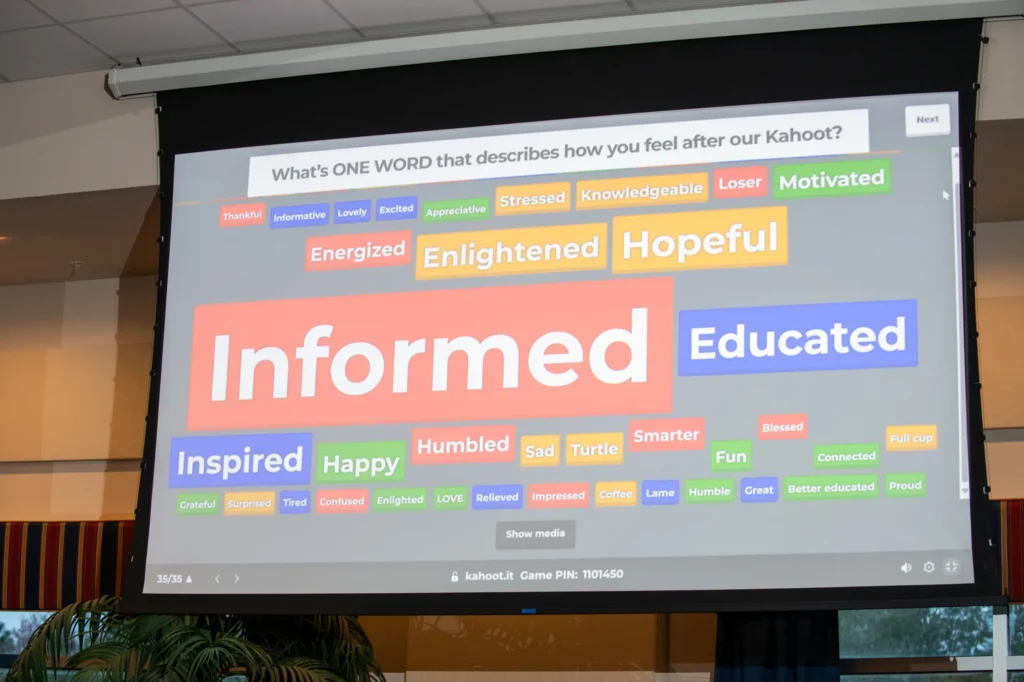
To conclude, attendees shared words describing their reactions to what they learned from the summit, forming a word cloud that included “informed, educated, inspired, and hopeful.”  

Each guest also received a children’s book to give away in honor of International Give a Book Day, thanks to Brianna Ray and Elicia Hinson, who curated several age-appropriate selections. A Grade Level Reading resource table, set up by Brianna, provided additional books and information. 

JWB extends gratitude to the Pinellas County School Board, government officials, partner agencies, board members, staff, and volunteers who contributed to this successful event. 

To view our 2024 Annual Report Video, click here

To view more event photos, click here

100 Advocates for Mental Health and Substance Abuse Treatment Join Forces at the Florida Capital

Mental health and substance abuse continues to be a serious concern in Florida. Data published last month in Forbes puts the state among the top in the country when it comes to the percent of adults who have a mental health disorder, but can’t afford a doctor.

Melanie Brown-Woofter, the president and CEO of the Florida Behavioral Health Association, says mental health touches everything.

“We know that one in 5 of us will have a mental health disorder, and that almost every family has been touched by substance use in our state and in our nation,” she said. “It is something that we have to work towards. It literally takes a village — everything from crisis care to residential to recovery supports. All of those pieces have to fit together.”

As mental health and substance abuse treatment providers gathered at the Capitol Wednesday to mark Behavioral Health Awareness Day, Brown-Woofter gave thanks to state leaders for doing more to remove the stigma from addiction and mental illness.

“We’re able to normalize the conversation, so that people can talk about their mental health or their substance use disorder, and it becomes commonplace,” she said. “Many years ago, there was such stigma that if the conversation began, people would turn their head or leave the room. Or they had to whisper, they couldn’t talk about it.”

But there’s plenty of work left to do. Data published last month by Forbes shows Florida has the fourth-highest percentage of adults who have a mental health disorder but can’t see a doctor due to cost …

…and the seventh highest percentage of adults with a mental illness who do not receive any treatment.

(The Worst States For Mental Health Care 2025; Jan. 2, 2025)

Copyright 2025 WFSU

Read the article as originally published at https://www.wqcs.org/wqcs-news/2025-02-13/100-advocates-for-mental-health-and-substance-abuse-treatment-join-forces-at-the-florida-capital

The Economic Impact of Mental Health

Mental illness costs the economy about $200 billion in lost earnings each year. That’s why it’s so important to normalize conversations about mental health, especially in the C-suite. Mental health is physical health, but too often shame and stigma prevent employees from seeking treatment. When leaders openly share their own emotional and mental health challenges, it models this behavior, so employees feel safe to do so as well.


In Tampa Bay Thrives’ 2023 Resident Mental Health Study, 14% (a 4% increase over the previous year) of respondents reported missing work due to a mental or emotional condition, and the typical employee missed 4 days per month. This corresponds to a loss of 524,500 workdays per month or 6.3 million workdays per year, a significant increase from 2022.


At The Mosaic Company, the world’s leading integrated producer of concentrated phosphate and potash, some company huddles begin with a mental health query: “How is everyone doing today? Let’s check on how you’re feeling.” It’s all part of a psychological wellness program rolled out by Mosaic three years ago that moves beyond the risk reduction environment to one that centers around overall wellness: physical, psychological, and financial health.


This year, Tampa Bay Thrives is partnering with companies such as, The Mosaic Company, Crisis Center of Tampa Bay, Juvenile Welfare Board of Pinellas County, and Polk County Board of County Commissioners, to guide them on their journey to becoming Bell Seal certified. The Bell Seal for Workplace Mental Health is a national certification program recognizing employers committed to creating mentally healthy workplaces.


Mental health isn’t just about one person. It affects the entire family. Our generation of young people has experienced multiple traumatic events: the pandemic, school shootings, widespread environmental and natural disasters, and global humanitarian crises. More than half (54%) of all Mental Health America screenings were completed by children and young adults under 25, and screenings skyrocketed by over 594% from 2019 to 2022.


Parents with children under 18 make up 40% of the workforce, and, beyond that Gen Z-ers are the future of our workforce. If the kids are not alright, neither are working caregivers. 1 in 3 Tampa Bay residents does not feel comfortable talking with their children about mental health. The main reason is that parents fear they might upset their children or make them worry unnecessarily.


Tampa Bay Thrives has engaged over 1,000 individuals, youth, parents, teachers, and providers to support our children’s mental health and will convene stakeholders and leaders to build a transformational approach in 2024.
Tampa Bay Thrives needs CEOs, employers, and business leaders to join the mental health movement! You play a pivotal role in helping shape a more mentally healthy future. The benefits and culture around mental health support that you or your company provides can create the ripple effect that leads to saved lives and systems change.
Join the movement, together, for a better tomorrow.


Deputy Sheriff Tyler Wilson recalls how he overcame the stigma to seek help in our #IYKYK campaign.


“While serving my community as a Deputy Sheriff, I began to experience severe PTSD symptoms, including flashbacks, depression, and anxiety. I had been exposed to multiple critical incidents, one involving a shooting with a suicidal individual and another with a terribly violent traffic crash involving the death of multiple children. The flashbacks and other symptoms became so severe that I seriously contemplated taking my own life to end the pain.


I sought help through my Employee Assistance Program, only to find the counselor inept at dealing with the severity of the trauma I had experienced. I also met with a psychiatrist who quickly prescribed me strong and habit-forming medications, which didn’t feel like the right fit for me.


Luckily through perseverance, I found a therapist who better fit my needs, and she was able to help guide me out of the darkness. I was also blessed to be treated by a cutting-edge virtual reality treatment. These treatments are the reason I am able to share my story today. I am now fortunate enough to speak nationwide about my experience and assist others in their healing process.”


Read the article as originally published at https://tbbwmag.com/2023/12/06/the-economic-impact-of-mental-health/

Impact Catalyst: Ep 9 – Beth Houghton, Juvenile Welfare Board

JWB CEO Beth A. Houghton recently sat down for a virtual interview with St. Pete Catalyst on the COVID-19 perfect storm: increased need coupled with food shortages our local #foodbanks are facing. Beth also sheds light on other basic needs Pinellas County families are experiencing, and shares the JWB Pinellas response with Joe Hamilton.