CMHI Hosts REACH Institute Training for Pinellas Pediatric Professionals

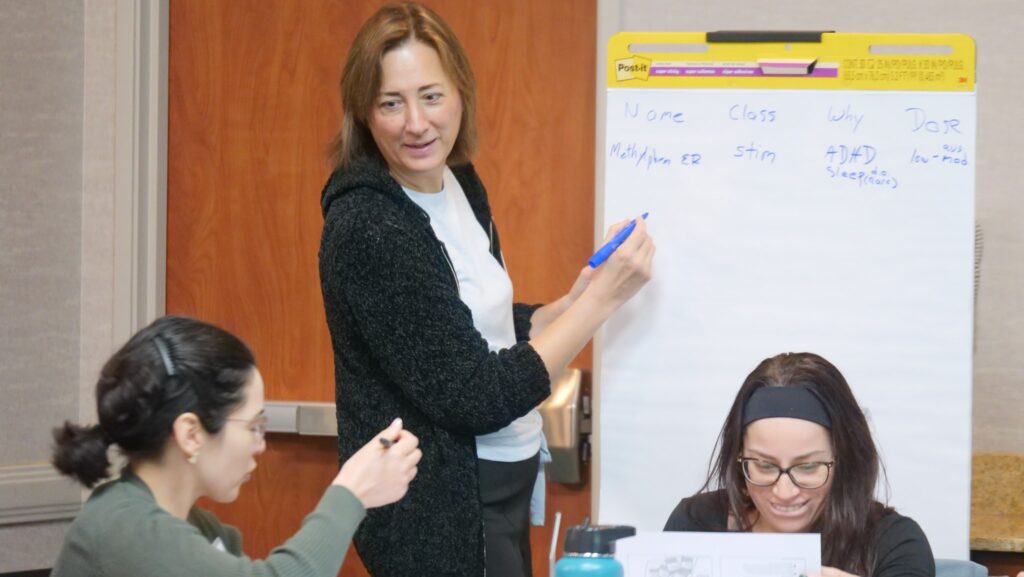
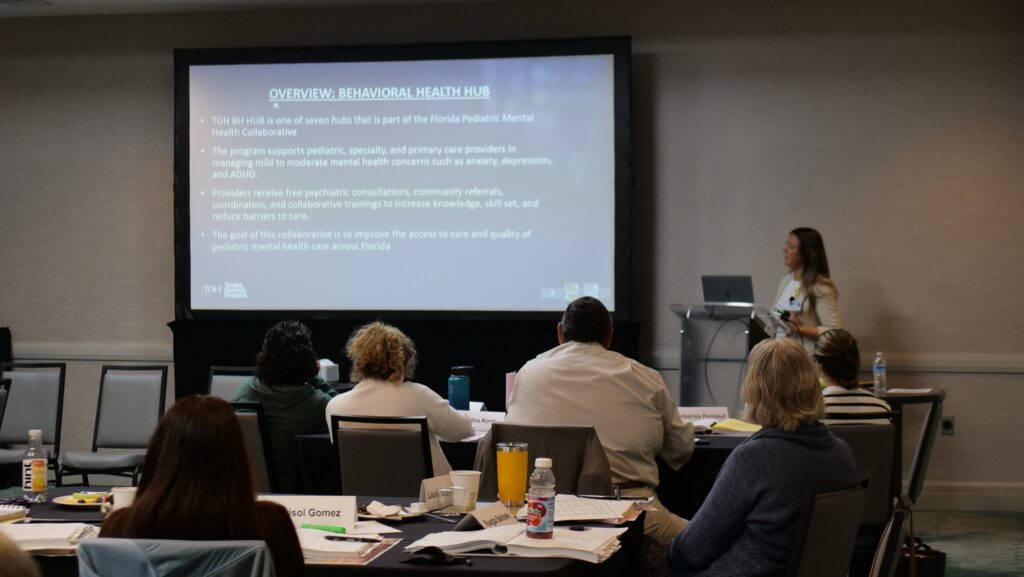
JWB’s Children’s Mental Health Initiative (CMHI) made it possible for 20 local pediatric professionals to participate in the REACH Institute’s Patient-Centered Mental Health in Pediatric Primary Care mini fellowship from January 23-25 at the Hilton St. Petersburg Carillon Park.  

The comprehensive, in-person, 16-hour training is designed to help pediatricians increase their comfort and skills in assessing, diagnosing, and treating low to moderate pediatric mental health conditions in their respective pediatric practices. Over four additional months, the pediatricians will also participate in a case-based distance learning program with national primary care and child/adolescent psychiatry experts to learn to manage pediatric mental health issues encountered in daily practice. 

The goal is to help these medical professionals correctly identify pediatric health problems such as childhood depression, ADHD, bipolar disorder, anxiety states (including PTSD), oppositional and conduct disorders, and psychosis. They will then be able to create and implement a treatment plan including selecting medications and mobilizing existing resources like family members, school personnel, and other professional caregivers—all while serving patients in their pediatric practice where families and children already feel safe and secure. 

Bringing this three-day REACH Institute training to our community supports CMHI’s commitment to creating a high-quality, service-integrated system of care in Pinellas County that focuses on prevention, early detection, and early intervention for children and families. 

See more photos from the training on Facebook.  

Social Media Threats Spike across Bay Area: Here’s How to Protect Yourself Online

JWB’s offer of free Parent ProTech accounts for Pinellas families was mentioned at the beginning of the news segment for Safer Internet Day that aired and is posted on Fox 13.

The Brief

  • The FBI in Tampa has reported a spike in threats, with more than half of the reported threats in 2026 coming from social media.
  • On Safer Internet Day, state and federal law enforcement agencies are warning about the trends they’re seeing in the Tampa Bay area.
  • FBI agents say they’re expanding capacity to work more closely with local law enforcement agencies to help investigate threat cases.

FBI agents in the Tampa Bay say they’ve seen a spike in threats, specifically social media threats.

By the numbers: Agents with the FBI Tampa Field Office say they’ve received 105 reports of threats since the beginning of the year. 69 of those threats have come from social media.

In 2025, Special Agent Matt Fodor says they tracked 580 threat cases.

“Only 2% of those cases resulted in a federal arrest,” he said. “That doesn’t mean that the rest of them were not arrested. It means that’s what we charged federally.”

What they’re saying: Fodor says they work with local law enforcement to thwart these threats through a number of disruption techniques.

“It could be a mental health issue that requires social services engagement,” he said. “Sometimes a Baker Act with an extended visit is a disruption for us. But clearly, there’s an epidemic out there and not only that, juveniles. We have very limited resources to combat juveniles, and the locals are just very well-postured to handle those individuals.”

He says they have to take each threat that they investigate seriously.

“There’s a lot of folks that really like to get clicks and like the attention online, so seemingly they pick topics that are controversial, and they’ll use that as a platform to make threats,” Fodor said.

He says in some cases, they’re empty threats, but in other cases, they could be intercepting a potential tragedy.

“Oftentimes, after a tragedy strikes, we kind of dig in a little bit and find out one, that somebody knew about it,” Fodor said. “But number two, that there was some sort of leakage or some way that this individual is communicating the world of their intent.”

Dig deeper: Fodor says local law enforcement agencies are particularly well-equipped to investigate school threats. He says the local counties have robust threat teams, but many of them focus primarily on school threats.

“Schools, got it,” he said. “They were on top of it, but anything else, I felt some significant need to get involved and provide some additional training to them. And then the other thing is, the FBI can act as a flagpole.”

Fodor pointed out other types of threat cases like stalking and threats to businesses.

He says the FBI is expanding its capacity to help train local law enforcement and provide them with additional resources to work with one another.

“We also have local threat management coordinators that train all of local law enforcement on the current things that we’re seeing, as far as threats go, and trying to build that network,” Fodor said.

Crimes against children

State and federal officials are also trying to make a dent in crimes against children. FBI agents say Florida is a hotbed for these types of crimes.

“Your child who is sitting in your living room could be on multiple platforms,” U.S. Attorney of the Middle District of Florida Gregory Kehoe said. “Talking to someone while you and she or he are watching television and you don’t know who this stranger is in your living room.”

Kehoe says they’ve seen these types of cases escalate with the use of social media platforms and chatrooms.

“Law enforcement can do so much,” he said. “We get leads, we track down the leads, investigate the matters, and we prosecute people that are involved in these internet threats. But there is a whole array of platforms and communication devices that the young people in this community and elsewhere are privy to.”

Kehoe emphasized the importance of parents and families being involved in the children’s lives. He says they need to take a proactive approach to monitoring what their children are doing online.

“The dark web is a very dangerous place and it is, I don’t want to say omnipresent, but pretty close,” he said.

Kehoe says arresting these perpetrators is not the lone solution to this problem.

“They take that platform down and in miraculous speed they’re up on another platform,” he said. “So frankly, there is no way that law enforcement can police this without the help of parents.”

In Pinellas County, the Juvenile Welfare Board recently announced that it’s paying for memberships for parents and families to Parent ProTech, which is a platform for parents to educate themselves on how to keep their children safe online.

View the segment and read the article as originally published at https://www.fox13news.com/news/social-media-threats-spike-across-bay-area-heres-how-protect-yourself-online

Safer Internet Day: JWB Offers FREE Digital Safety Tools to Pinellas Families

On this Safer Internet Day (Feb. 10), the Juvenile Welfare Board of Pinellas County (JWB) reminds all parents, grandparents, and caregivers that today’s children are immersed in a digital world where devices drive their learning, play, and social lives, fundamentally reshaping their reality and drastically shifting how they experience childhood. However, this environment also presents significant challenges and evolving dangers.

Cyberbullies, human traffickers, and online predators can enter homes 24/7 through a child’s phone, computer, or gaming device. Left unchecked, it’s as risky as leaving a child’s bedroom window open or your front door unlocked.

“There’s a growing gap between what parents know about technology and how their children actually use it,” stated Michael Mikurak, Interim CEO of the Juvenile Welfare Board of Pinellas County (JWB). “Studies tell us that kids average 8 to 11 hours on their devices each day, and online crimes against children are up as well. That’s why JWB launched a groundbreaking initiative to safeguard children online and equip families with vital support.”

As we mark Safer Internet Day—and in a historic first for the nation—JWB is leading the way by removing all barriers and providing free Parent ProTech subscriptions to every Pinellas County household, ensuring universal access to critical online safety resources.

Parent ProTech’s vast online library includes expert-backed guides, videos, conversation starters, and safety recommendations on topics like parental controls, social media, AI, and more. Plus, their experts tirelessly scan the digital horizon, delivering timely and dynamic videos that move as fast as technology does—all to help parents make the internet safer for their kids.

Research consistently shows a strong link between cyberbullying, online harassment, and youth suicide; that’s why JWB added Parent ProTech to our Children’s Mental Health Initiative to help protect children, reduce stigmas, and instill a sense of well-being and belonging.

“JWB has invested Pinellas County tax dollars to protect kids online and help pave a safer path through the internet for the next generation,” continued Mikurak. “If we can prevent even one child from being cyberbullied, trapped by screen addiction, or targeted by online predators, we’ve succeeded!”

Pinellas County Residents, access your free Parent ProTech subscription on Safer Internet Day and start using expert-led video guides and resources today!

Sign up at app.parentprotech.com/jwb

A screenshot of Parent Protech resources for digital safety that JWB is making available to Pinellas families

“Stranger Danger” Has Moved Online

  • 500,000 predators are active online daily.
  • 800,000 sex offenders are known and registered in the U.S. – 1,800 in Pinellas County alone.
  • 1,000 counts of child pornography were investigated by the Pinellas County Sheriff’s Office last year.
  • A child’s first exposure to pornography online starts as young as 5!
  • Children average 8 to 11 hours on devices daily—even higher during school breaks. Yet, studies show that spending just three (3) hours online doubles their risk of depression and anxiety.
  • The U.S. has seen a significant increase in youth suicide, with rates among children aged 10 to 14 increasing by 95% between 2000 and 2018—making suicide the second leading cause of death for youth. This spike has occurred concurrently with increased online and social media use and has been declared a “Youth Mental Health Crisis” by the U.S. Surgeon General.