
JWB Earns Certified Autism Center™ Designation, Strengthens Support for Neurodiverse Families

Today the Juvenile Welfare Board of Pinellas County (JWB) celebrated a milestone for inclusion, officially receiving its Certified Autism Center™ (CAC) designation from the International Board of Credentialing and Continuing Education Standards (IBCCES) during a community event in Clearwater.

The designation means JWB staff have completed specialized training to better understand and support autistic and sensory-sensitive individuals—helping ensure the children and families they serve feel welcomed and understood.

“As an organization dedicated to the health and safety of children in Pinellas County, we were excited to partner with IBCCES to earn our Certified Autism Center™ credential,” said Michael Mikurak, interim CEO of the Juvenile Welfare Board. “This training gives our team the tools to better connect with children who are autistic or have sensory sensitivities, while also deepening our understanding of the unique needs of their families and caregivers. It inspires us to create experiences where every child feels valued and encouraged to reach their full potential.”
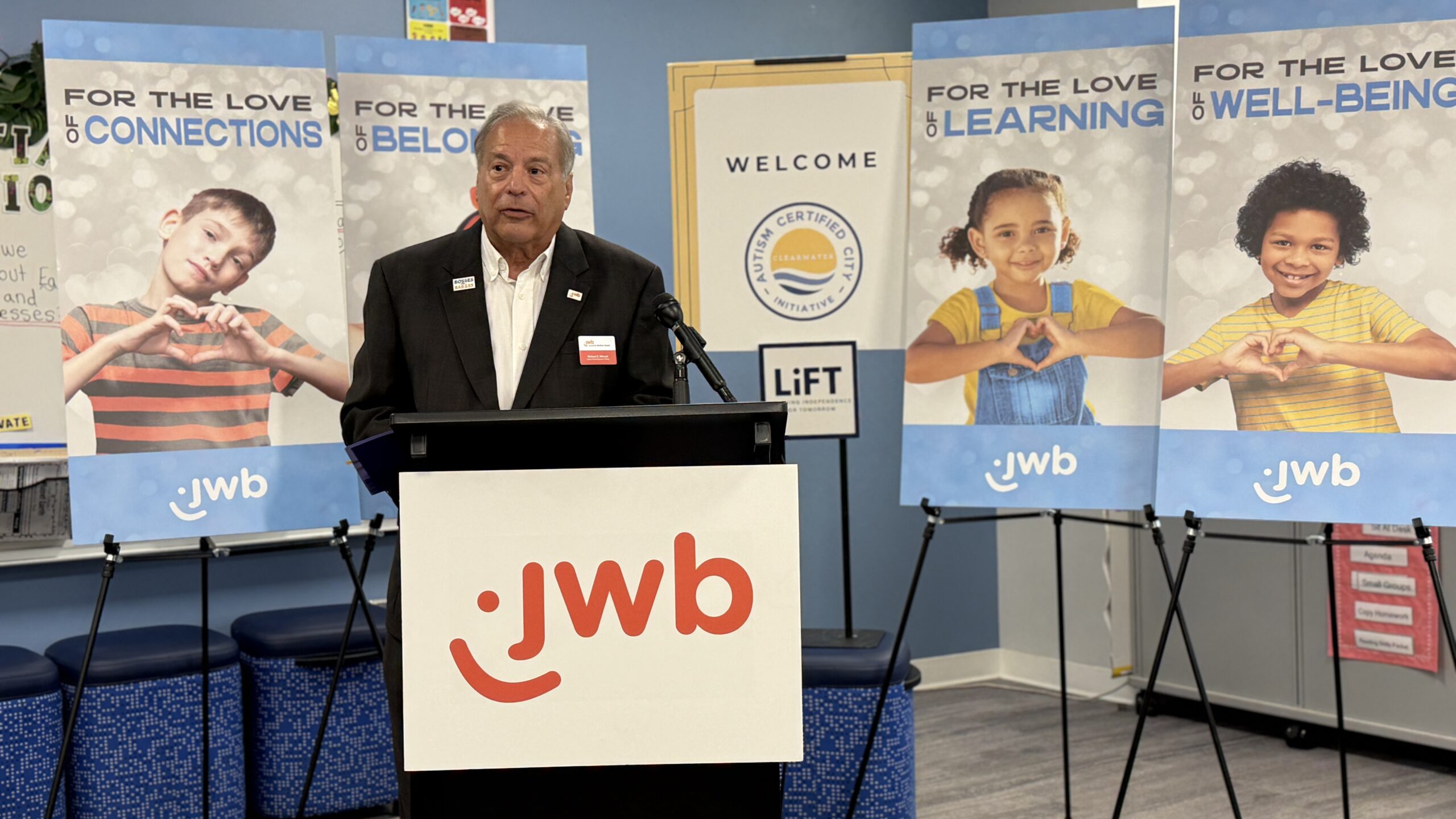
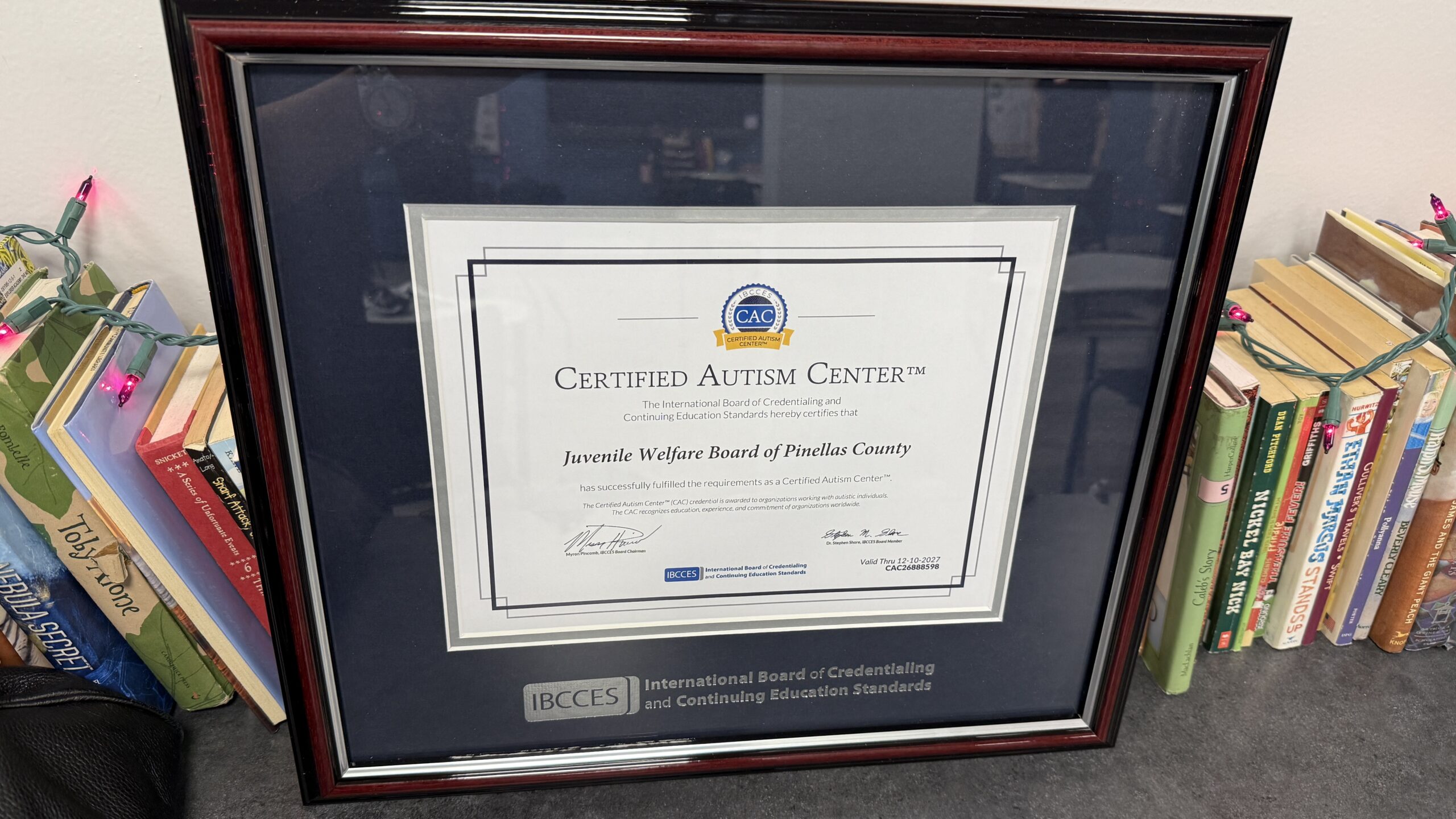
This training gives our team the tools to better connect with children who are autistic or have sensory sensitivities and inspires us to create experiences where every child feels valued and encouraged to reach their full potential
JWB's Certified Autism Center certification was presented by IBCCES on March 31

The recognition comes just as Autism Acceptance Month begins April 1. JWB is now the second organization in Clearwater to earn the CAC designation. To receive certification, at least 80 percent of staff must complete specialized autism and sensory training. JWB went above that standard, with 94 percent of staff fulfilling the training requirements.

“By becoming a Certified Autism Center™, the Juvenile Welfare Board of Pinellas County is taking a powerful step toward ensuring that every child and family they serve feels understood, supported, and included,” said Myron Pincomb, IBCCES board chairman. “This certification reflects JWB’s dedication to building a community where neurodiversity is recognized and embraced. The impact will extend far beyond individual programs and strengthen the entire community by creating more accessible, compassionate services for the families who rely on them.”

To support inclusivity efforts, the Juvenile Welfare Board of Pinellas County is featured on the IBCCES Accessibility App, which is free to download. This app provides individuals with a variety of disabilities real-time guidance on certified destinations, sensory-friendly spaces, and tailored recommendations. By connecting users to accessible locations worldwide, the app helps ensure seamless, enjoyable experiences for everyone.

JWB already supports a range of programs that embrace neurodiverse children across Pinellas County. Through partnerships with organizations such as Learning Empowered, Suncoast Center, PARC, R’Club, and The Children’s Home Network, JWB funds early childhood services, specialized learning programs, and caregiver support—ensuring families have access to resources that foster growth, inclusion, and long-term success.

The certificate was presented at Learning Independence for Tomorrow (LiFT), a Clearwater nonprofit and school that empowers students with neurodiversity through academics, life skills, and career training. As the first organization in the city to earn the CAC designation, LiFT served as a fitting backdrop for the celebration, highlighting a growing local commitment to creating environments where neurodiverse individuals can learn, thrive, and succeed.
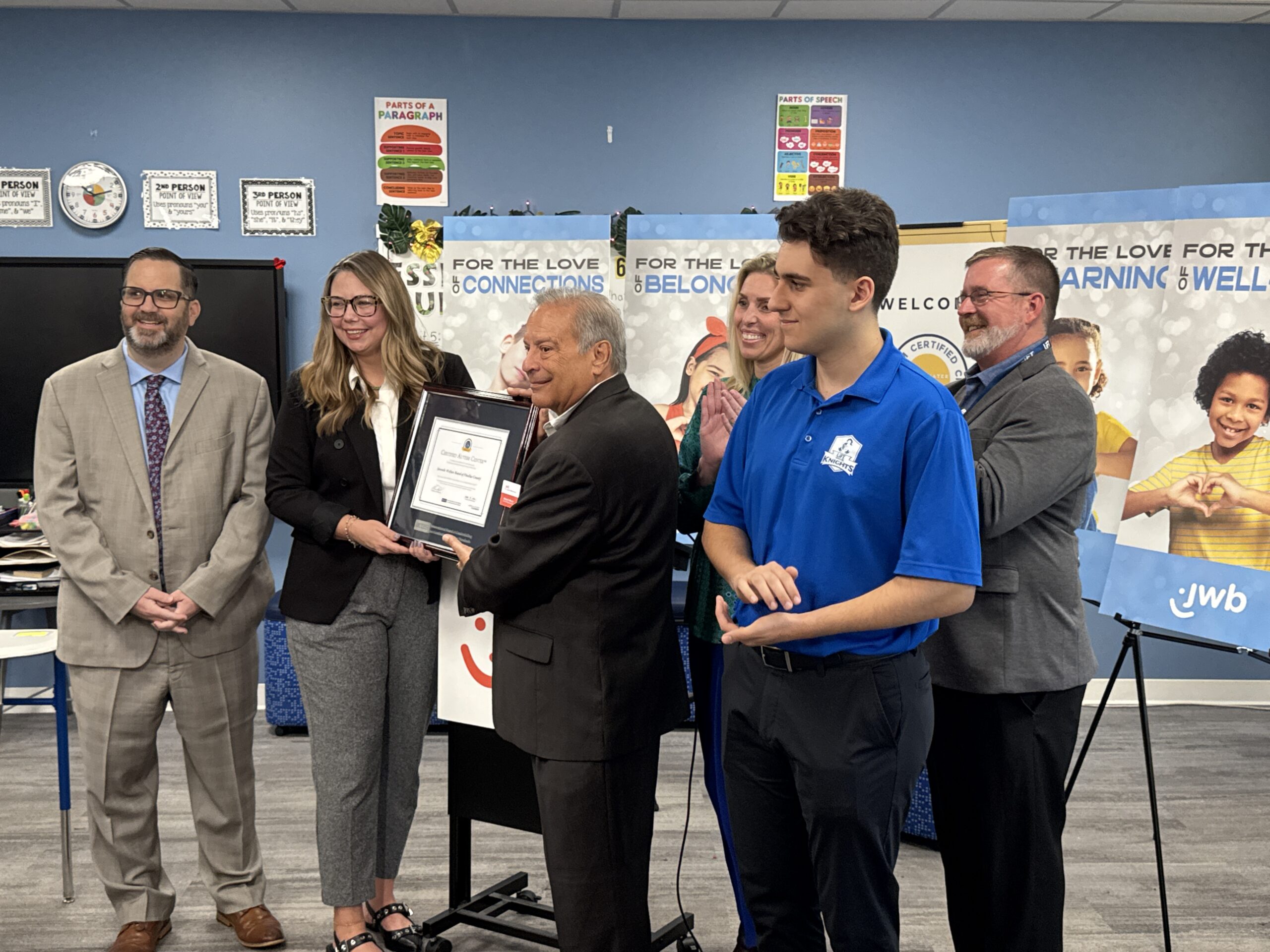
The certificate was presented at Learning Independence for Tomorrow (LiFT),as their staff and students celebrated with JWB.

“Having people who understand how you learn really makes a difference,” said John Oureilidis, a senior at LiFT who plans to study Educational Development at St. Petersburg College after graduation. “Seeing JWB take this step shows they care about students like me and want to help us succeed.”
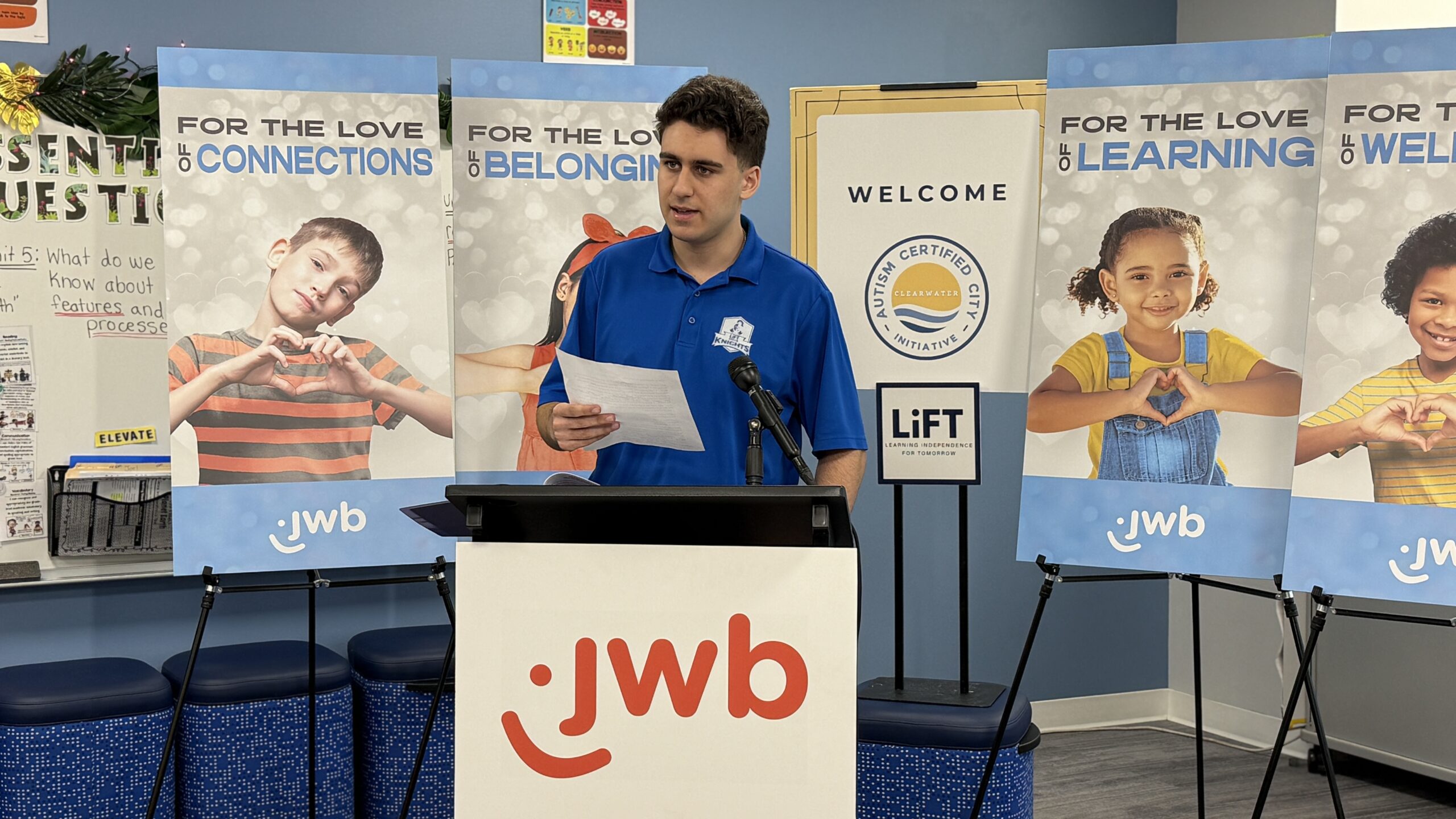
ohn Oureilidis, a senior at LiFT who plans to study Educational Development at St. Petersburg College after graduation, spoke at the press event

“LiFT is proud to partner with JWB and IBCCES to create a more inclusive community,” said Matt Spence, LiFT Executive Director. “When organizations come together to recognize and meet the needs of neurodiverse children, it sends a powerful message: every child belongs, and every family matters. With JWB achieving CAC status, more children in our community will have those life-changing experiences every day.”
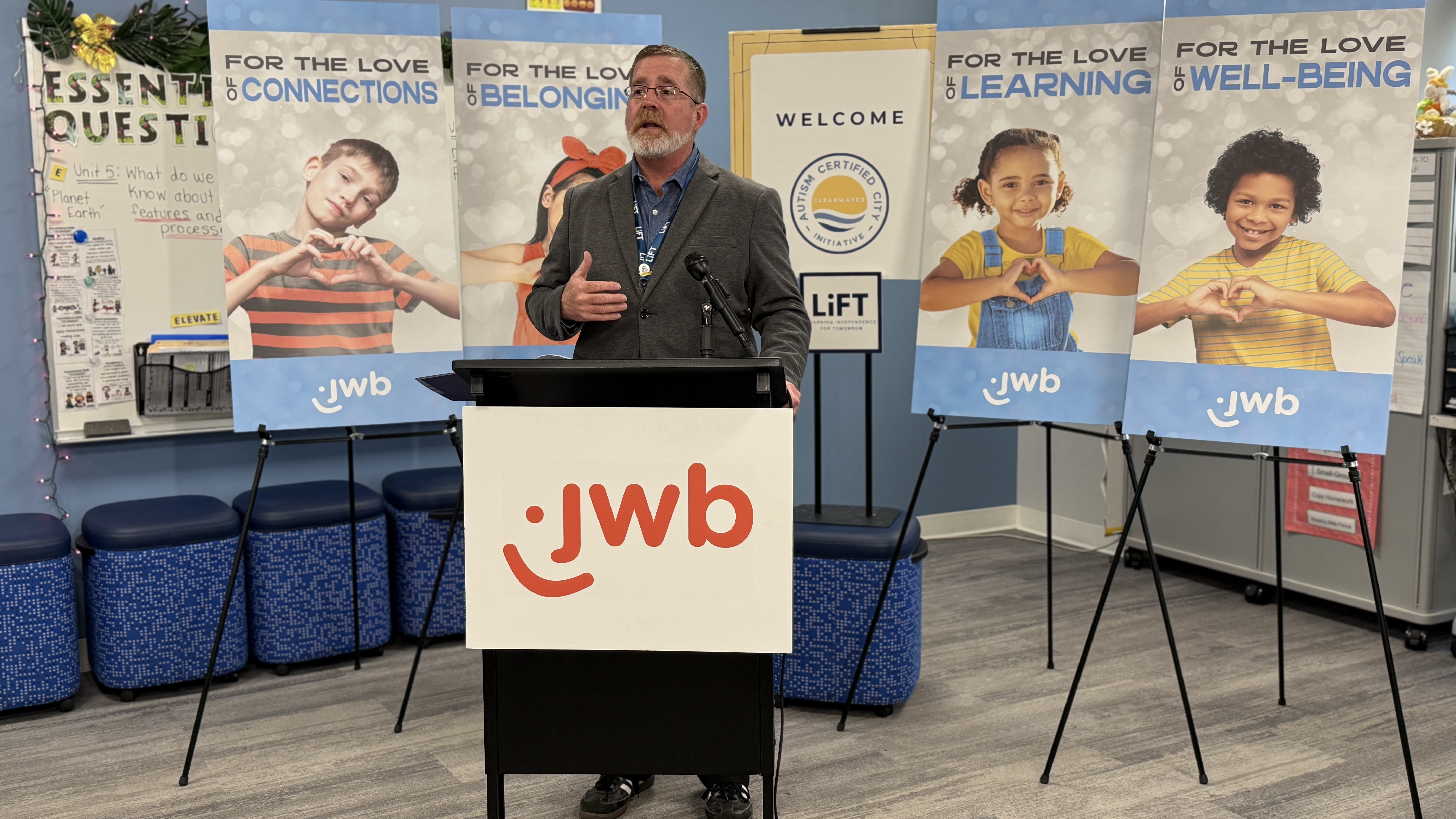
“LiFT is proud to partner with JWB and IBCCES to create a more inclusive community,” said Matt Spence, LiFT Executive Director.

JWB’s certification also complements a community-led effort to explore the possibility of Clearwater becoming an Autism Certified City™. If pursued, the designation would include specialized staff training to help ensure that families with autistic or sensory-sensitive children feel supported across schools, healthcare providers, attractions, and community spaces.

Enjoy a few photos from the event here, and stay tuned to our social media as we share more posts throughout the month as we celebrate Autism Awareness Month. Like and follow @JWBPinellas on Facebook, X, Instagram, LinkedIn, and YouTube.

Amid Divisive CEO Search, Juvenile Welfare Board Employees Focus on Work

While a contentious meeting about a new CEO was unfolding in a conference room at the Juvenile Welfare Board of Pinellas County last month, 80 people were at work in cubicles down the hall.

The agency’s workforce has little to do with the board of high-ranking officials and gubernatorial appointees who are in a standstill over whom to elect for CEO. Among the front-runners are interim CEO Michael Mikurak and Glenton “Glen” Gilzean Jr., a popular appointee of Gov. Ron DeSantis who was accused of misspending millions in his last position.

The 11-member board consists of five county officials — including the state attorney and public defender — and six people appointed by DeSantis.

All but one of the board members appointed by DeSantis voiced their support for Gilzean during a straw poll at the Feb. 20 meeting, drawing questions from community members about whether the welfare board is taking a political turn.

The board is responsible for deciding how to spend $100 million annually in taxpayer funds. Employees behind the scenes rely on data and community relationships to workshop programs that support the county’s children and families.

The job application lists the CEO’s salary range between $200,000 and $245,000.

Here’s what to know about the employees behind the organization.

‘Like a think tank’

In fiscal year 2025, the welfare board spent $102 million on 98 programs across 51 organizations, said Chief Operating Officer Karen Boggess.

Boggess has been at the organization for more than 20 years and said many of her neighbors don’t know that the board funds programs they use, including early learning centers and after-school programs at the YMCA.

The Juvenile Welfare Board also funds hunger initiatives, domestic violence organizations and behavioral health services.

In 2025, dollars went toward providing 7 million meals to children, connecting 9,000 kids with mental health services and distributing thousands of brain development materials to new parents, Boggess said.

A key success of the year, Boggess said, was that 99% of parents receiving in-home support from the organization reported being “free of abuse or neglect” during or after services.

“The staff take their work so seriously,” said Megan Seales, director of performance and evaluation. “We’re taking dollars out of homes in our community and they’re trusting us to be accountable to them. Behind every number is a kid.”

Becky Albert, director of strategic initiatives, said she sees the welfare board as a “think tank” for what the county’s children need.

She said the board has historically focused on funding programs in “higher-risk” areas of the county, but data told a different story. She discovered through Pinellas-Pasco Medical Examiner’s Office data that children were dying by suicide more frequently in higher income areas north of Ulmerton Road.

A couple years ago, she persuaded the board to change its mindset and allocate funds for mental health specialists to embed in private practice pediatric offices in the northern part of the county.

Albert also sits on the state’s child abuse death review team, where she and others discuss how child deaths could be prevented.

Suffocation is the leading cause of preventable death for children, said Albert, who brought the Sleep Baby Safely initiative to the Juvenile Welfare Board in 2018. Infant sleep-related deaths have been cut in half countywide since the educational campaign launched, according to medical examiner’s office data.

Some of the campaign’s key tips include always putting babies to sleep on their backs, having babies sleep in a crib and not an adult bed, and staying alert while breastfeeding by setting an alarm.

Two-thirds of infant sleep-related deaths happened when parents shared a bed with their baby, and infants are 40 times more likely to die in adult beds than a crib, according to the Sleep Baby Safely website.

Data has become a backbone to most of the organization’s work, said Michael Havelka, who prefers “data dude” to his formal title of senior data business and intelligence analyst.

Havelka is working on an interactive map of Pinellas County that will allow the public to see how issues differ from neighborhood to neighborhood based on census tract data.

Jomar Lopez, senior strategic researcher, said that Havelka finds the “what” in the numbers and then goes into communities to find the “why.”

Lopez meets with residents at neighborhood councils in three parts of the county to hear what they need from the welfare board and what issues are unique to their areas.

“We inform them and they inform us,” he said.

Humble beginnings

For nearly 80 years, the welfare board has remained nonpartisan.

A judge and an attorney worked together in the 1940s to try to persuade Pinellas County commissioners to allocate funds toward juvenile welfare at the conclusion of World War II.

When commissioners refused, the attorney, Leonard W. Cooperman, wrote a bill that called for the creation of a board. Voters approved the referendum during the November 1946 general election.

The Juvenile Welfare Board became the first entity in the United States dedicated to serving children and families with taxpayer dollars,according to a digital history written by USF. Mailande Holland Barton, who helped establish the Junior League of St. Petersburg, became the first board chairperson.

At the February meeting, some officials on today’s board expressed concern about the organization taking a political direction.

“I don’t want to see JWB become a political entity,” said Pinellas schools Superintendent Kevin Hendrick. “I want JWB to be about kids, I want to become less political, apolitical.”

Becca Gross-Tieder, a public awareness officer for the board, came to work at the agency because her father, Judge Raymond Gross, once served on the board.

“The reason this organization is so essential is because of the tireless efforts that often go unseen by the incredible people who work here,” she said.

She said she feels a responsibility to see that work continue. The board is scheduled to make a decision on the CEO on April 6.

Read the article as originally published at https://www.tampabay.com/news/pinellas/2026/03/27/pinellas-juvenile-welfare-board-jwb/

New Free Resource for Pinellas County Parents to Protect Kids Online

What You Need To Know

  • The Juvenile Welfare Board of Pinellas County launched an initiative to safeguard children online and equip families with vital support called Parent ProTech
  • Through taxpayer dollars, JWB is making it possible for all Pinellas County parents, grandparents and concerned citizens to receive a free annual subscription to Parent ProTech
  • Parent ProTech is an online platform that has a vast online library which includes expert-backed guides, videos, conversation starters and safety recommendations on topics like parental controls, social media, AI and more
  • Katie Blaxberg is a mother of three and says to keep up with the fast-changing online world, this has been a helpful resource for parenting

Online games are meant to be fun.

They entertain us, they connect us, but sometimes it is who they connect us to that is concerning. 

Katie Blaxberg is a mother of three. Two of those three are teenage boys. 

“They have PlayStations, you know, they have their laptops for school,” said Blaxberg. “And of course, with teenagers, the ever-present phone.”

To keep up with the wonders and also the worries that come with the world of online access, she has been using a new free tool available to all Pinellas County residents now.

It is called Parent ProTech.

“Every video that I’ve watched and I’ve watched a lot are really easily digestible. They’re short. They’re to the point,” said Blaxberg. 

The application shares the latest information on just about every game, social media platform and application that kids use today. 

Parent ProTech is meant to educate, but also help parents safeguard their kids. 

“It’s not only parents, it’s grandparents, it’s caregivers and anyone who touches the child to ensure that they are protected,” said Michael Mikurak, Interim CEO of the Juvenile Welfare Board of Pinellas County.

The JWB is funding this free resource using taxpayer dollars. 

Mikurak said they worked with law enforcement on finding this resource and it was statistics about predators that motivated the JWB to make this available. 

The FBI estimates half a million predators are active online daily. Locally, the Pinellas County Sheriff’s Office conducted more than 100 investigations into child pornography in 2025 with more than 1,000 counts of child pornography being obtained, shared and viewed.

Parent ProTech has a big goal of helping parents thwart predators by educating and monitoring their children. 

“They show you how to put in parental controls, how to ensure that your child is safe, and just what questions to ask,” said Mikurak.

For parents like Blaxberg, it is also nice for when kids come to them with the latest app and social media site asking questions. 

“For your child to come to you and say, ‘Hey, I want this app,’ and you then as a parent can go to this resource, look it up. If it’s not there, you can message them right away,” said Blaxberg. 

To sign up for Parent ProTech, just a name, email and zip code are required at app.parentprotech.com/jwb. The zip code is necessary to ensure the fee is waived for Pinellas County residents.

Watch the video segment and read the article as originally published at https://baynews9.com/fl/tampa/news/2026/03/03/parent-protech-juvenile-welfare-board