Juvenile Welfare Board Receives Autism Center Designation

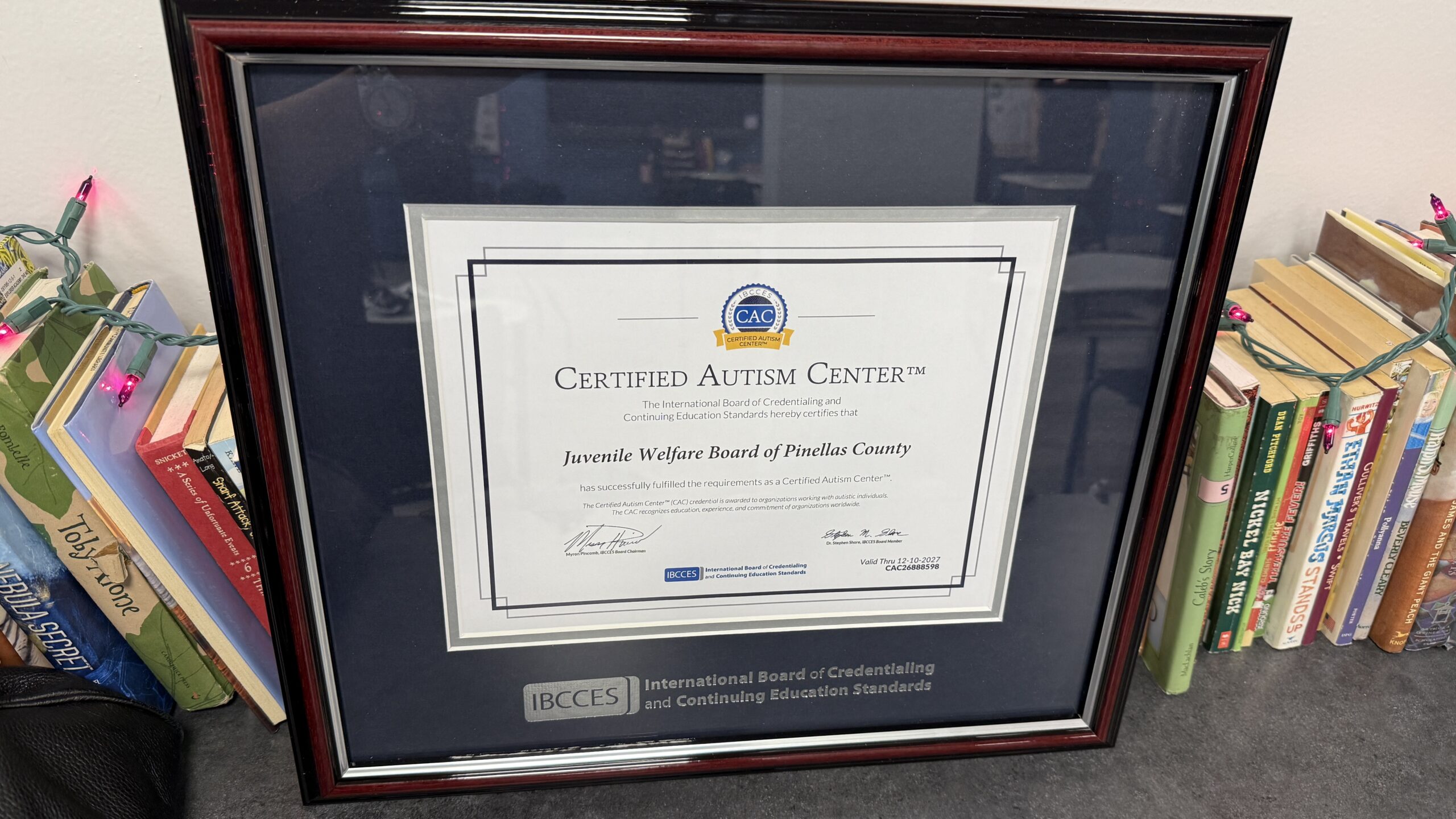
The Juvenile Welfare Board of Pinellas County has become the second organization in Clearwater to receive a Certified Autism Center designation from the International Board of Credentialing and Continuing Education Standards (IBCCES). 

This means that JWB staff members have completed specialized training to better understand and support individuals on the spectrum. Eighty percent of the team needed to participate in the training to earn the certification. JWB exceeded the requirements at 94%. 

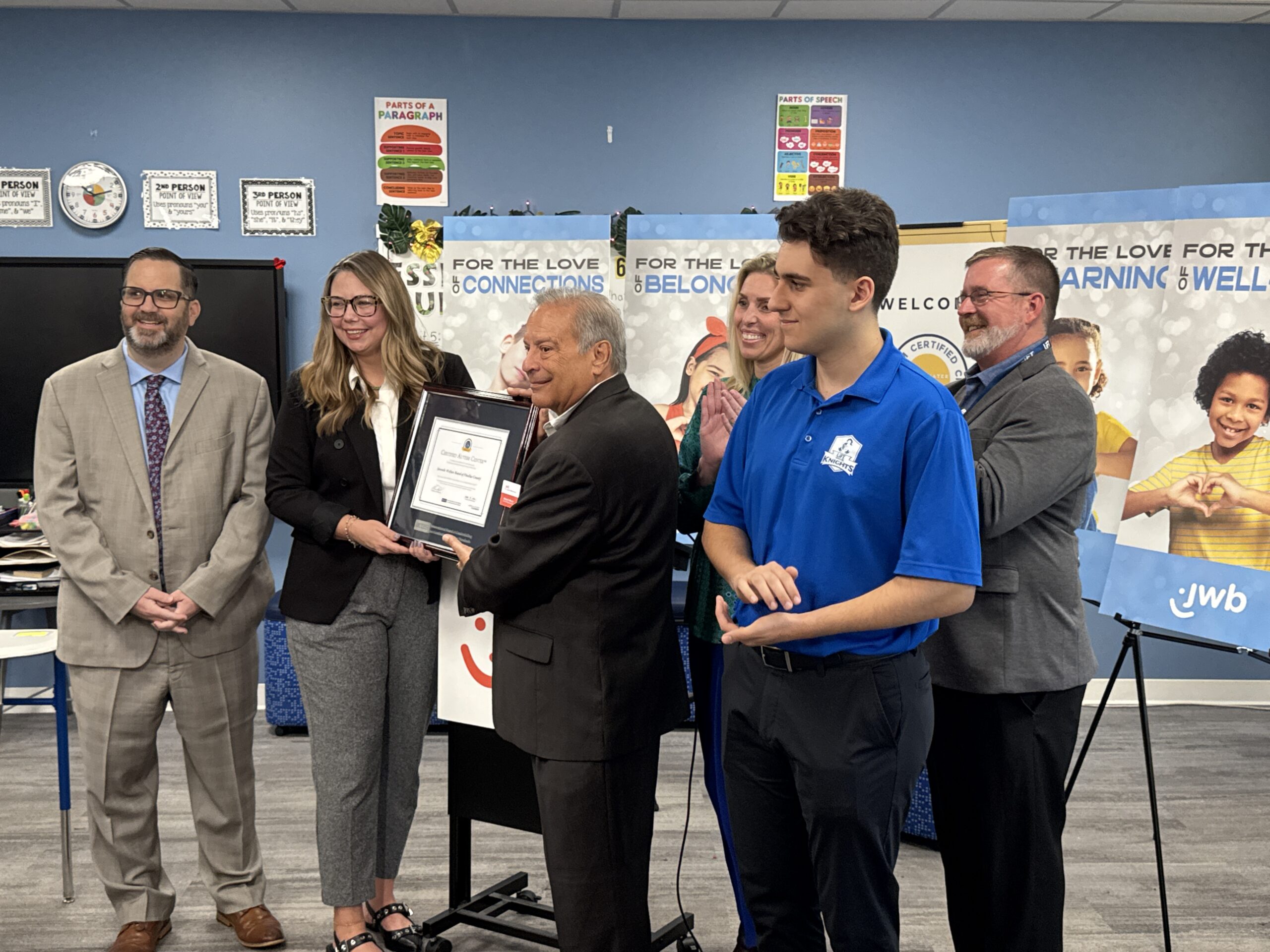
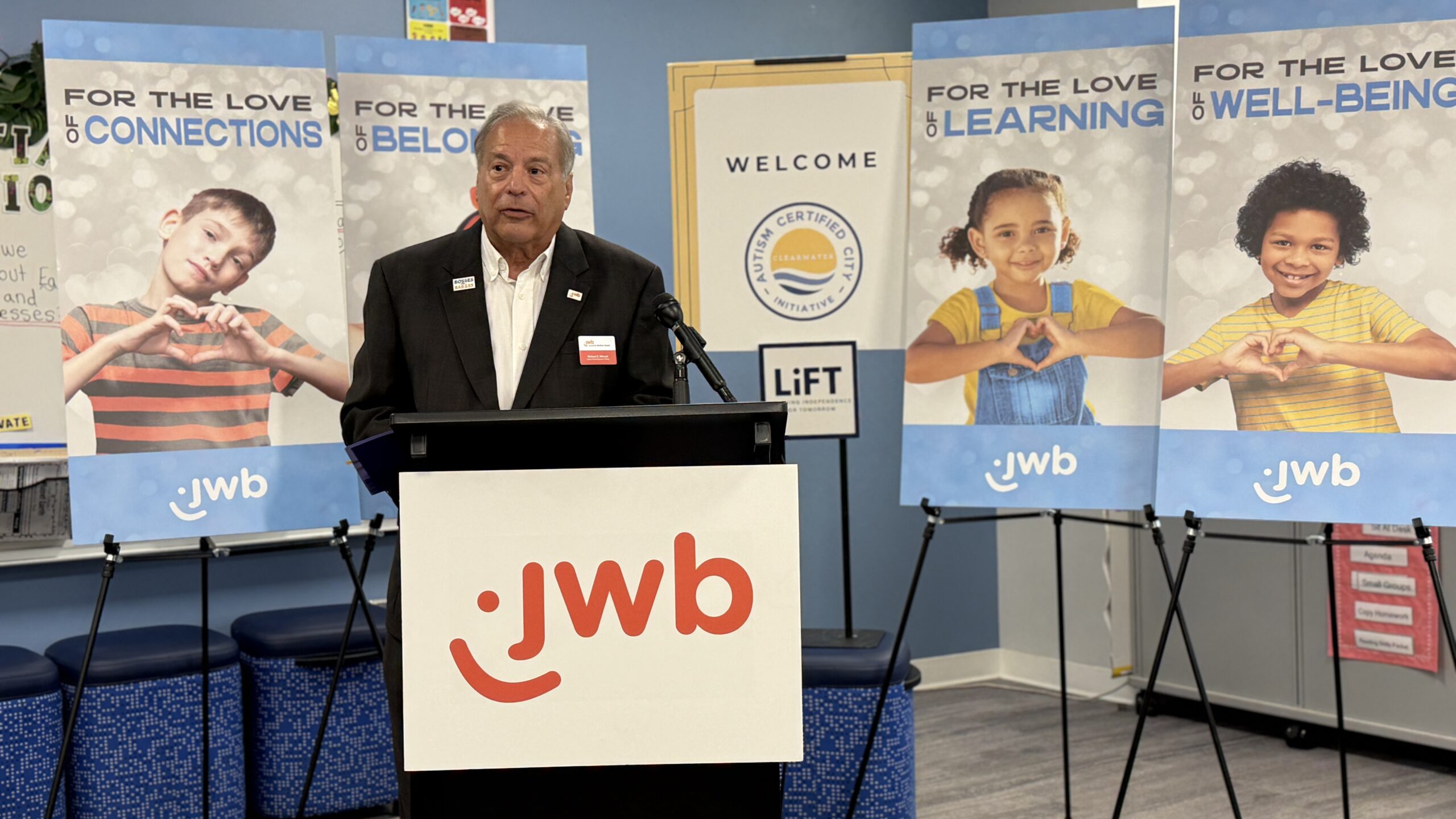
A presentation ceremony was held Tuesday at LiFT (Learning Independence for Tomorrow) in Clearwater. The nonprofit educational institution, which provides a safe space for neurodiverse students, was the first in the city to receive the designation. 

Today marks the start of Autism Acceptance Month. 

“It really adds more value in support of those children who need to be heard and seen,” JWB interim CEO Michael Mikurak told the Catalyst. “Their families need to be understood. We need to be able to help them navigate through this process and provide them with the services that they need to allow their children to become who they want to be.” 

He added that JWB’s staff enthusiastically participated in the effort. They had to attend classes and were tested on their knowledge. 

Jacksonville-based IBCCES provides training and certifications in the “fields of autism, neurodiversity and accessibility” in over 130 countries, according to the organization’s website. 

JWB leaders began exploring the opportunity over a year ago, Mikurak explained. The organization, which was created by a special act of the Florida legislature in the 1940s, develops and financially supports programs that serve youth in Pinellas County. 

Neurodiversity, he said, was “an area that didn’t get enough visibility.” There is a “growing population” of children who have been diagnosed with autism. The goal was to equip JWB’s team with the necessary skills to help these young people in the community thrive. 

Currently, JWB supports a wide range of programs that benefit neurodiverse youth including early childhood services, specialized learning initiatives and caregiver support, Mikurak explained. Collaborations with organizations such as the Suncoast Center, Parc Center for Disabilities and R’Club Child Care have been an essential component of this work. 

“We are looking to expand and extend the reach of our current programs,” he said. “We are additionally looking at potential future programs that will fit in the mode of this.” 

JWB board chair and Lealman Fire District division chief James Millican has been very supportive of the effort, Mikurak added. His grandson was diagnosed with autism. 

“This is part of a larger initiative to make Clearwater and other surrounding areas an Autism Certified City,” said IBCCES president Meredith Tekin. “This means that there are multiple options for folks who are autistic or have sensory sensitivities where they are going to feel welcomed and understood and there’s organizations coming together that are focusing on making sure that people feel included.”  

Mesa, Arizona was the first U.S. municipality to receive the Autism Certified City designation, also provided by IBCCES, in 2019. 

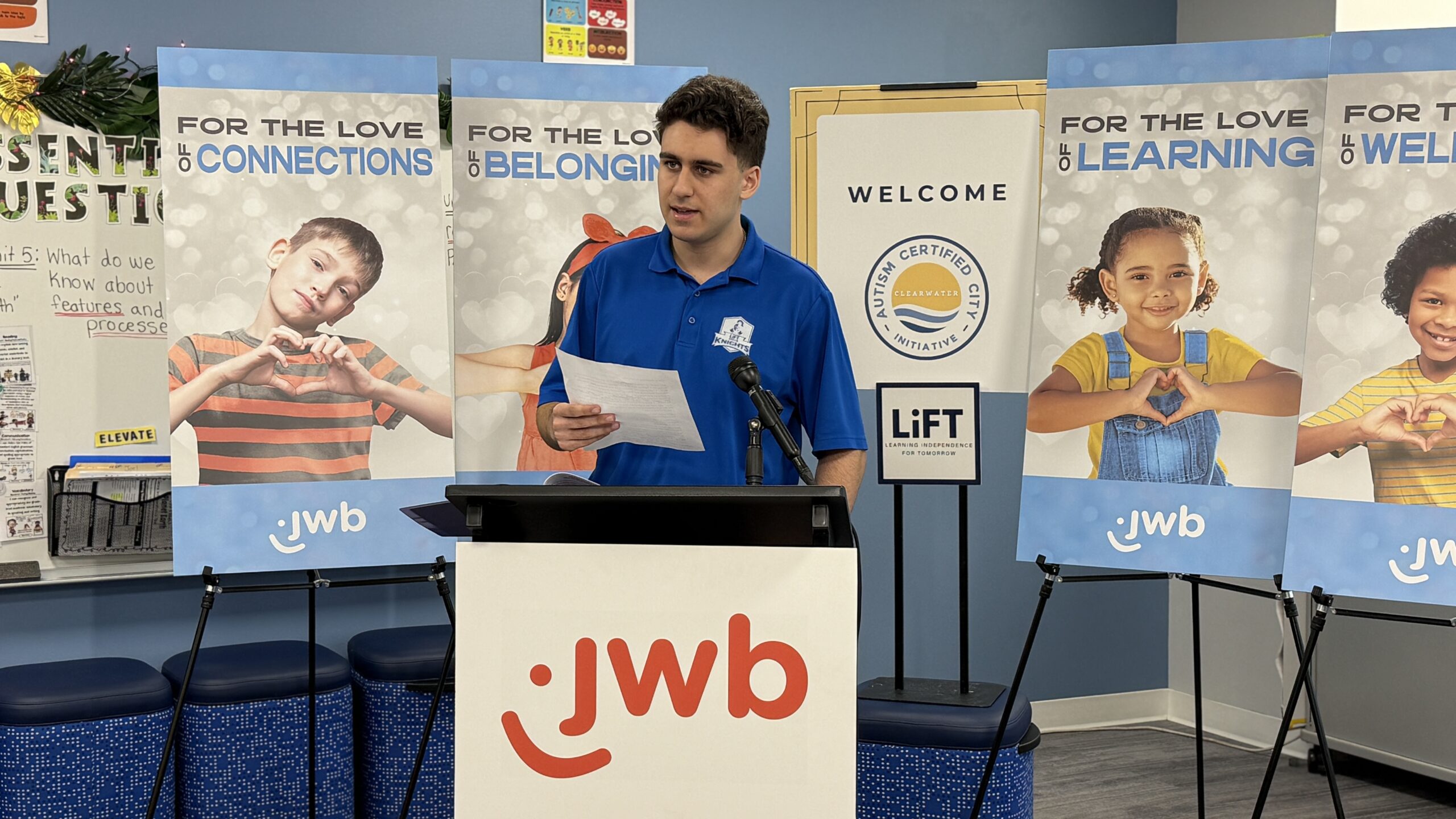
“LiFT’s mission to inspire and empower people with neurodiversity to learn, thrive and succeed is so important,” LiFT Academy 12th grade student John Oureilidis said at the Tuesday ceremony. 

 “But, this mission should not stop at our school. It’s something our entire community needs to embrace. When communities make the effort to appreciate and accommodate these differences, they create opportunities for everyone to succeed.” 

JWB website

 IBCCES website 

Read the article as originally published at https://stpetecatalyst.com/juvenile-welfare-board-receives-autism-center-designation/
Juvenile Welfare Board of Pinellas County Becomes Second Certified Autism Center™ in Clearwater, Florida

The International Board of Credentialing and Continuing Education Standards (IBCCES) proudly awards the Certified Autism Center™ (CAC) designation to the Juvenile Welfare Board of Pinellas County (JWB). To become a CAC, at least 80% of staff completed autism and sensory training to empower them with the knowledge and understanding to best assist, support, and communicate with autistic and sensory-sensitive individuals. JWB went above that standard, with 94 percent of staff fulfilling the training requirements. By completing the training and certification, JWB becomes the second organization in Clearwater to earn the CAC accreditation.

“As an organization dedicated to the health and safety of children in Pinellas County, we were excited to partner with IBCCES to earn our Certified Autism Center™ credential,” said Michael Mikurak, interim CEO of the Juvenile Welfare Board. “This training gives our team the tools to better connect with children who are autistic or have sensory sensitivities, while also deepening our understanding of the unique needs of their families and caregivers. It inspires us to create experiences where every child feels valued and encouraged to reach their full potential.”

“By becoming a Certified Autism Center™, the Juvenile Welfare Board of Pinellas County is taking a powerful step toward ensuring that every child and family they serve feels understood, supported, and included,” said Myron Pincomb, IBCCES board chairman. “This certification reflects JWB’s dedication to building a community where neurodiversity is recognized and embraced. The impact will extend far beyond individual programs and strengthen the entire community by creating more accessible, compassionate services for the families who rely on them every day.”

JWB’s certification also complements a broader, community-led effort to explore the possibility of Clearwater becoming an Autism Certified City™ (ACC), which is being spearheaded by Learning Independence for Tomorrow (LiFT). If pursued, this designation would ensure both visitors and residents have access to a wide range of organizations that are trained and certified to better welcome and assist autistic and sensory-sensitive individuals across the healthcare, public safety, education, hospitality, entertainment, and recreation industries.

For 25 years, IBCCES has been a leader in providing autism, sensory and neurodiversity training and certification for professionals worldwide, including those in healthcare, education, public safety, travel, and corporate sectors. As the only credentialing board offering these programs, IBCCES provides training from subject matter experts and autistic self-advocates, along with long-term support, continuous learning, onsite reviews, and renewal requirements to ensure continued growth and lasting impact.

To further support inclusivity efforts, the Juvenile Welfare Board of Pinellas County is featured on the IBCCES Accessibility App, which is free to download. This app provides individuals with a variety of disabilities real-time guidance on certified destinations, sensory-friendly spaces, and tailored recommendations. By connecting users to accessible locations worldwide, the app helps ensure seamless, enjoyable experiences for everyone.

IBCCES also provides access to resources such as AccessibilityCertified.com and AutismTravel.com, which are free online tools for families that list certified locations and professionals. Each organization listed on the site has met IBCCES certification requirements.

Read the article as originally published at https://www.florida-observer.com/article/902753752-juvenile-welfare-board-of-pinellas-county-becomes-second-certified-autism-center-in-clearwater-florida

JWB Earns Certified Autism Center™ Designation, Strengthens Support for Neurodiverse Families

Today the Juvenile Welfare Board of Pinellas County (JWB) celebrated a milestone for inclusion, officially receiving its Certified Autism Center™ (CAC) designation from the International Board of Credentialing and Continuing Education Standards (IBCCES) during a community event in Clearwater.

The designation means JWB staff have completed specialized training to better understand and support autistic and sensory-sensitive individuals—helping ensure the children and families they serve feel welcomed and understood.

“As an organization dedicated to the health and safety of children in Pinellas County, we were excited to partner with IBCCES to earn our Certified Autism Center™ credential,” said Michael Mikurak, interim CEO of the Juvenile Welfare Board. “This training gives our team the tools to better connect with children who are autistic or have sensory sensitivities, while also deepening our understanding of the unique needs of their families and caregivers. It inspires us to create experiences where every child feels valued and encouraged to reach their full potential.”

This training gives our team the tools to better connect with children who are autistic or have sensory sensitivities and inspires us to create experiences where every child feels valued and encouraged to reach their full potential
JWB's Certified Autism Center certification was presented by IBCCES on March 31

The recognition comes just as Autism Acceptance Month begins April 1. JWB is now the second organization in Clearwater to earn the CAC designation. To receive certification, at least 80 percent of staff must complete specialized autism and sensory training. JWB went above that standard, with 94 percent of staff fulfilling the training requirements.

“By becoming a Certified Autism Center™, the Juvenile Welfare Board of Pinellas County is taking a powerful step toward ensuring that every child and family they serve feels understood, supported, and included,” said Myron Pincomb, IBCCES board chairman. “This certification reflects JWB’s dedication to building a community where neurodiversity is recognized and embraced. The impact will extend far beyond individual programs and strengthen the entire community by creating more accessible, compassionate services for the families who rely on them.”

To support inclusivity efforts, the Juvenile Welfare Board of Pinellas County is featured on the IBCCES Accessibility App, which is free to download. This app provides individuals with a variety of disabilities real-time guidance on certified destinations, sensory-friendly spaces, and tailored recommendations. By connecting users to accessible locations worldwide, the app helps ensure seamless, enjoyable experiences for everyone.

JWB already supports a range of programs that embrace neurodiverse children across Pinellas County. Through partnerships with organizations such as Learning Empowered, Suncoast Center, PARC, R’Club, and The Children’s Home Network, JWB funds early childhood services, specialized learning programs, and caregiver support—ensuring families have access to resources that foster growth, inclusion, and long-term success.

The certificate was presented at Learning Independence for Tomorrow (LiFT), a Clearwater nonprofit and school that empowers students with neurodiversity through academics, life skills, and career training. As the first organization in the city to earn the CAC designation, LiFT served as a fitting backdrop for the celebration, highlighting a growing local commitment to creating environments where neurodiverse individuals can learn, thrive, and succeed.

The certificate was presented at Learning Independence for Tomorrow (LiFT),as their staff and students celebrated with JWB.

“Having people who understand how you learn really makes a difference,” said John Oureilidis, a senior at LiFT who plans to study Educational Development at St. Petersburg College after graduation. “Seeing JWB take this step shows they care about students like me and want to help us succeed.”

ohn Oureilidis, a senior at LiFT who plans to study Educational Development at St. Petersburg College after graduation, spoke at the press event

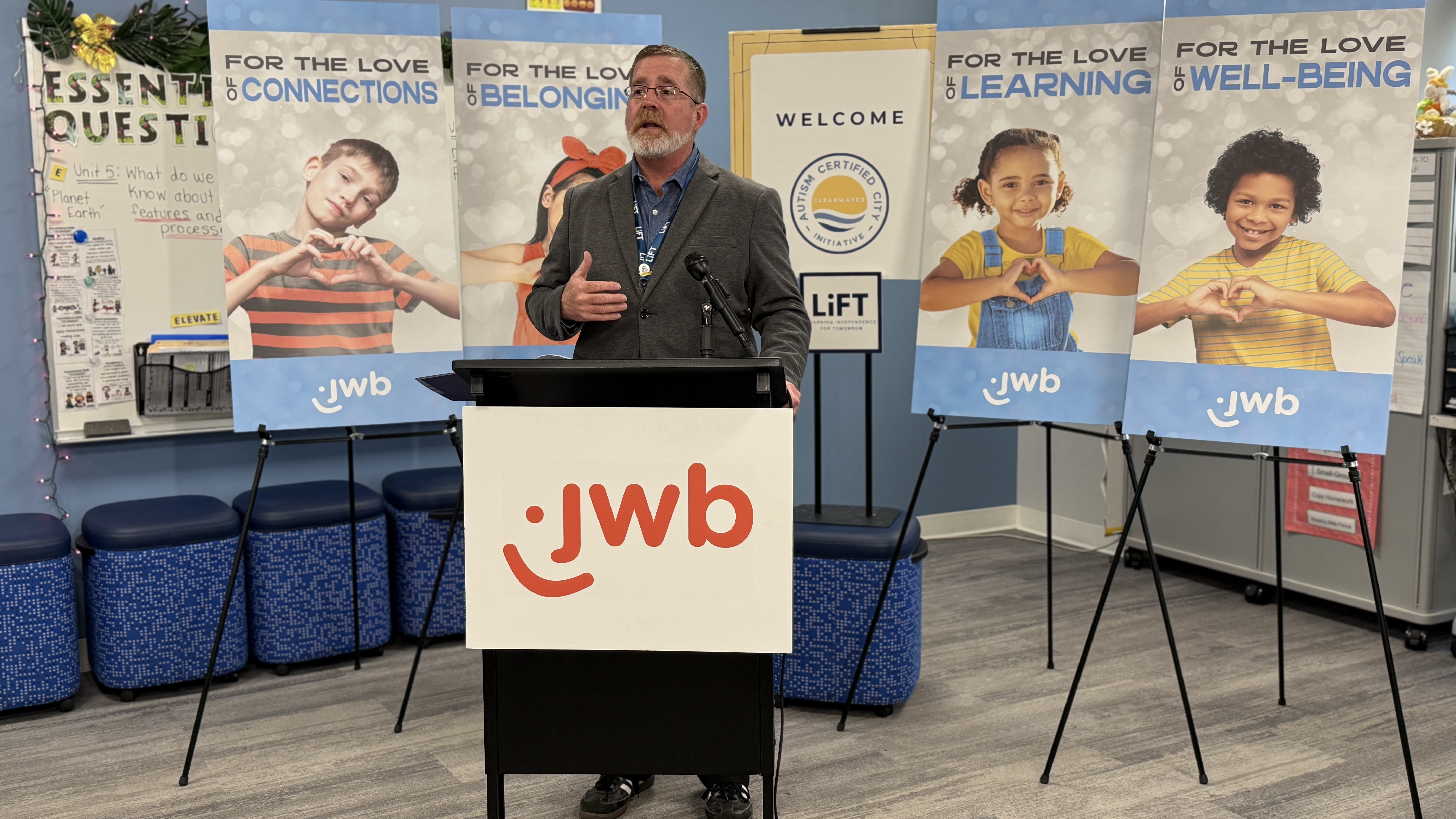
“LiFT is proud to partner with JWB and IBCCES to create a more inclusive community,” said Matt Spence, LiFT Executive Director. “When organizations come together to recognize and meet the needs of neurodiverse children, it sends a powerful message: every child belongs, and every family matters. With JWB achieving CAC status, more children in our community will have those life-changing experiences every day.”

“LiFT is proud to partner with JWB and IBCCES to create a more inclusive community,” said Matt Spence, LiFT Executive Director.

JWB’s certification also complements a community-led effort to explore the possibility of Clearwater becoming an Autism Certified City™. If pursued, the designation would include specialized staff training to help ensure that families with autistic or sensory-sensitive children feel supported across schools, healthcare providers, attractions, and community spaces.

Enjoy a few photos from the event here, and stay tuned to our social media as we share more posts throughout the month as we celebrate Autism Awareness Month. Like and follow @JWBPinellas on Facebook, X, Instagram, LinkedIn, and YouTube.

Amid Divisive CEO Search, Juvenile Welfare Board Employees Focus on Work

While a contentious meeting about a new CEO was unfolding in a conference room at the Juvenile Welfare Board of Pinellas County last month, 80 people were at work in cubicles down the hall.

The agency’s workforce has little to do with the board of high-ranking officials and gubernatorial appointees who are in a standstill over whom to elect for CEO. Among the front-runners are interim CEO Michael Mikurak and Glenton “Glen” Gilzean Jr., a popular appointee of Gov. Ron DeSantis who was accused of misspending millions in his last position.

The 11-member board consists of five county officials — including the state attorney and public defender — and six people appointed by DeSantis.

All but one of the board members appointed by DeSantis voiced their support for Gilzean during a straw poll at the Feb. 20 meeting, drawing questions from community members about whether the welfare board is taking a political turn.

The board is responsible for deciding how to spend $100 million annually in taxpayer funds. Employees behind the scenes rely on data and community relationships to workshop programs that support the county’s children and families.

The job application lists the CEO’s salary range between $200,000 and $245,000.

Here’s what to know about the employees behind the organization.

‘Like a think tank’

In fiscal year 2025, the welfare board spent $102 million on 98 programs across 51 organizations, said Chief Operating Officer Karen Boggess.

Boggess has been at the organization for more than 20 years and said many of her neighbors don’t know that the board funds programs they use, including early learning centers and after-school programs at the YMCA.

The Juvenile Welfare Board also funds hunger initiatives, domestic violence organizations and behavioral health services.

In 2025, dollars went toward providing 7 million meals to children, connecting 9,000 kids with mental health services and distributing thousands of brain development materials to new parents, Boggess said.

A key success of the year, Boggess said, was that 99% of parents receiving in-home support from the organization reported being “free of abuse or neglect” during or after services.

“The staff take their work so seriously,” said Megan Seales, director of performance and evaluation. “We’re taking dollars out of homes in our community and they’re trusting us to be accountable to them. Behind every number is a kid.”

Becky Albert, director of strategic initiatives, said she sees the welfare board as a “think tank” for what the county’s children need.

She said the board has historically focused on funding programs in “higher-risk” areas of the county, but data told a different story. She discovered through Pinellas-Pasco Medical Examiner’s Office data that children were dying by suicide more frequently in higher income areas north of Ulmerton Road.

A couple years ago, she persuaded the board to change its mindset and allocate funds for mental health specialists to embed in private practice pediatric offices in the northern part of the county.

Albert also sits on the state’s child abuse death review team, where she and others discuss how child deaths could be prevented.

Suffocation is the leading cause of preventable death for children, said Albert, who brought the Sleep Baby Safely initiative to the Juvenile Welfare Board in 2018. Infant sleep-related deaths have been cut in half countywide since the educational campaign launched, according to medical examiner’s office data.

Some of the campaign’s key tips include always putting babies to sleep on their backs, having babies sleep in a crib and not an adult bed, and staying alert while breastfeeding by setting an alarm.

Two-thirds of infant sleep-related deaths happened when parents shared a bed with their baby, and infants are 40 times more likely to die in adult beds than a crib, according to the Sleep Baby Safely website.

Data has become a backbone to most of the organization’s work, said Michael Havelka, who prefers “data dude” to his formal title of senior data business and intelligence analyst.

Havelka is working on an interactive map of Pinellas County that will allow the public to see how issues differ from neighborhood to neighborhood based on census tract data.

Jomar Lopez, senior strategic researcher, said that Havelka finds the “what” in the numbers and then goes into communities to find the “why.”

Lopez meets with residents at neighborhood councils in three parts of the county to hear what they need from the welfare board and what issues are unique to their areas.

“We inform them and they inform us,” he said.

Humble beginnings

For nearly 80 years, the welfare board has remained nonpartisan.

A judge and an attorney worked together in the 1940s to try to persuade Pinellas County commissioners to allocate funds toward juvenile welfare at the conclusion of World War II.

When commissioners refused, the attorney, Leonard W. Cooperman, wrote a bill that called for the creation of a board. Voters approved the referendum during the November 1946 general election.

The Juvenile Welfare Board became the first entity in the United States dedicated to serving children and families with taxpayer dollars,according to a digital history written by USF. Mailande Holland Barton, who helped establish the Junior League of St. Petersburg, became the first board chairperson.

At the February meeting, some officials on today’s board expressed concern about the organization taking a political direction.

“I don’t want to see JWB become a political entity,” said Pinellas schools Superintendent Kevin Hendrick. “I want JWB to be about kids, I want to become less political, apolitical.”

Becca Gross-Tieder, a public awareness officer for the board, came to work at the agency because her father, Judge Raymond Gross, once served on the board.

“The reason this organization is so essential is because of the tireless efforts that often go unseen by the incredible people who work here,” she said.

She said she feels a responsibility to see that work continue. The board is scheduled to make a decision on the CEO on April 6.

Read the article as originally published at https://www.tampabay.com/news/pinellas/2026/03/27/pinellas-juvenile-welfare-board-jwb/

New Free Resource for Pinellas County Parents to Protect Kids Online

What You Need To Know

  • The Juvenile Welfare Board of Pinellas County launched an initiative to safeguard children online and equip families with vital support called Parent ProTech
  • Through taxpayer dollars, JWB is making it possible for all Pinellas County parents, grandparents and concerned citizens to receive a free annual subscription to Parent ProTech
  • Parent ProTech is an online platform that has a vast online library which includes expert-backed guides, videos, conversation starters and safety recommendations on topics like parental controls, social media, AI and more
  • Katie Blaxberg is a mother of three and says to keep up with the fast-changing online world, this has been a helpful resource for parenting

Online games are meant to be fun.

They entertain us, they connect us, but sometimes it is who they connect us to that is concerning. 

Katie Blaxberg is a mother of three. Two of those three are teenage boys. 

“They have PlayStations, you know, they have their laptops for school,” said Blaxberg. “And of course, with teenagers, the ever-present phone.”

To keep up with the wonders and also the worries that come with the world of online access, she has been using a new free tool available to all Pinellas County residents now.

It is called Parent ProTech.

“Every video that I’ve watched and I’ve watched a lot are really easily digestible. They’re short. They’re to the point,” said Blaxberg. 

The application shares the latest information on just about every game, social media platform and application that kids use today. 

Parent ProTech is meant to educate, but also help parents safeguard their kids. 

“It’s not only parents, it’s grandparents, it’s caregivers and anyone who touches the child to ensure that they are protected,” said Michael Mikurak, Interim CEO of the Juvenile Welfare Board of Pinellas County.

The JWB is funding this free resource using taxpayer dollars. 

Mikurak said they worked with law enforcement on finding this resource and it was statistics about predators that motivated the JWB to make this available. 

The FBI estimates half a million predators are active online daily. Locally, the Pinellas County Sheriff’s Office conducted more than 100 investigations into child pornography in 2025 with more than 1,000 counts of child pornography being obtained, shared and viewed.

Parent ProTech has a big goal of helping parents thwart predators by educating and monitoring their children. 

“They show you how to put in parental controls, how to ensure that your child is safe, and just what questions to ask,” said Mikurak.

For parents like Blaxberg, it is also nice for when kids come to them with the latest app and social media site asking questions. 

“For your child to come to you and say, ‘Hey, I want this app,’ and you then as a parent can go to this resource, look it up. If it’s not there, you can message them right away,” said Blaxberg. 

To sign up for Parent ProTech, just a name, email and zip code are required at app.parentprotech.com/jwb. The zip code is necessary to ensure the fee is waived for Pinellas County residents.

Watch the video segment and read the article as originally published at https://baynews9.com/fl/tampa/news/2026/03/03/parent-protech-juvenile-welfare-board

Social Media Threats Spike across Bay Area: Here’s How to Protect Yourself Online

JWB’s offer of free Parent ProTech accounts for Pinellas families was mentioned at the beginning of the news segment for Safer Internet Day that aired and is posted on Fox 13.

The Brief

  • The FBI in Tampa has reported a spike in threats, with more than half of the reported threats in 2026 coming from social media.
  • On Safer Internet Day, state and federal law enforcement agencies are warning about the trends they’re seeing in the Tampa Bay area.
  • FBI agents say they’re expanding capacity to work more closely with local law enforcement agencies to help investigate threat cases.

FBI agents in the Tampa Bay say they’ve seen a spike in threats, specifically social media threats.

By the numbers: Agents with the FBI Tampa Field Office say they’ve received 105 reports of threats since the beginning of the year. 69 of those threats have come from social media.

In 2025, Special Agent Matt Fodor says they tracked 580 threat cases.

“Only 2% of those cases resulted in a federal arrest,” he said. “That doesn’t mean that the rest of them were not arrested. It means that’s what we charged federally.”

What they’re saying: Fodor says they work with local law enforcement to thwart these threats through a number of disruption techniques.

“It could be a mental health issue that requires social services engagement,” he said. “Sometimes a Baker Act with an extended visit is a disruption for us. But clearly, there’s an epidemic out there and not only that, juveniles. We have very limited resources to combat juveniles, and the locals are just very well-postured to handle those individuals.”

He says they have to take each threat that they investigate seriously.

“There’s a lot of folks that really like to get clicks and like the attention online, so seemingly they pick topics that are controversial, and they’ll use that as a platform to make threats,” Fodor said.

He says in some cases, they’re empty threats, but in other cases, they could be intercepting a potential tragedy.

“Oftentimes, after a tragedy strikes, we kind of dig in a little bit and find out one, that somebody knew about it,” Fodor said. “But number two, that there was some sort of leakage or some way that this individual is communicating the world of their intent.”

Dig deeper: Fodor says local law enforcement agencies are particularly well-equipped to investigate school threats. He says the local counties have robust threat teams, but many of them focus primarily on school threats.

“Schools, got it,” he said. “They were on top of it, but anything else, I felt some significant need to get involved and provide some additional training to them. And then the other thing is, the FBI can act as a flagpole.”

Fodor pointed out other types of threat cases like stalking and threats to businesses.

He says the FBI is expanding its capacity to help train local law enforcement and provide them with additional resources to work with one another.

“We also have local threat management coordinators that train all of local law enforcement on the current things that we’re seeing, as far as threats go, and trying to build that network,” Fodor said.

Crimes against children

State and federal officials are also trying to make a dent in crimes against children. FBI agents say Florida is a hotbed for these types of crimes.

“Your child who is sitting in your living room could be on multiple platforms,” U.S. Attorney of the Middle District of Florida Gregory Kehoe said. “Talking to someone while you and she or he are watching television and you don’t know who this stranger is in your living room.”

Kehoe says they’ve seen these types of cases escalate with the use of social media platforms and chatrooms.

“Law enforcement can do so much,” he said. “We get leads, we track down the leads, investigate the matters, and we prosecute people that are involved in these internet threats. But there is a whole array of platforms and communication devices that the young people in this community and elsewhere are privy to.”

Kehoe emphasized the importance of parents and families being involved in the children’s lives. He says they need to take a proactive approach to monitoring what their children are doing online.

“The dark web is a very dangerous place and it is, I don’t want to say omnipresent, but pretty close,” he said.

Kehoe says arresting these perpetrators is not the lone solution to this problem.

“They take that platform down and in miraculous speed they’re up on another platform,” he said. “So frankly, there is no way that law enforcement can police this without the help of parents.”

In Pinellas County, the Juvenile Welfare Board recently announced that it’s paying for memberships for parents and families to Parent ProTech, which is a platform for parents to educate themselves on how to keep their children safe online.

View the segment and read the article as originally published at https://www.fox13news.com/news/social-media-threats-spike-across-bay-area-heres-how-protect-yourself-online

Safer Internet Day: JWB Offers FREE Digital Safety Tools to Pinellas Families

On this Safer Internet Day (Feb. 10), the Juvenile Welfare Board of Pinellas County (JWB) reminds all parents, grandparents, and caregivers that today’s children are immersed in a digital world where devices drive their learning, play, and social lives, fundamentally reshaping their reality and drastically shifting how they experience childhood. However, this environment also presents significant challenges and evolving dangers.

Cyberbullies, human traffickers, and online predators can enter homes 24/7 through a child’s phone, computer, or gaming device. Left unchecked, it’s as risky as leaving a child’s bedroom window open or your front door unlocked.

“There’s a growing gap between what parents know about technology and how their children actually use it,” stated Michael Mikurak, Interim CEO of the Juvenile Welfare Board of Pinellas County (JWB). “Studies tell us that kids average 8 to 11 hours on their devices each day, and online crimes against children are up as well. That’s why JWB launched a groundbreaking initiative to safeguard children online and equip families with vital support.”

As we mark Safer Internet Day—and in a historic first for the nation—JWB is leading the way by removing all barriers and providing free Parent ProTech subscriptions to every Pinellas County household, ensuring universal access to critical online safety resources.

Parent ProTech’s vast online library includes expert-backed guides, videos, conversation starters, and safety recommendations on topics like parental controls, social media, AI, and more. Plus, their experts tirelessly scan the digital horizon, delivering timely and dynamic videos that move as fast as technology does—all to help parents make the internet safer for their kids.

Research consistently shows a strong link between cyberbullying, online harassment, and youth suicide; that’s why JWB added Parent ProTech to our Children’s Mental Health Initiative to help protect children, reduce stigmas, and instill a sense of well-being and belonging.

“JWB has invested Pinellas County tax dollars to protect kids online and help pave a safer path through the internet for the next generation,” continued Mikurak. “If we can prevent even one child from being cyberbullied, trapped by screen addiction, or targeted by online predators, we’ve succeeded!”

Pinellas County Residents, access your free Parent ProTech subscription on Safer Internet Day and start using expert-led video guides and resources today!

Sign up at app.parentprotech.com/jwb

A screenshot of Parent Protech resources for digital safety that JWB is making available to Pinellas families

“Stranger Danger” Has Moved Online

  • 500,000 predators are active online daily.
  • 800,000 sex offenders are known and registered in the U.S. – 1,800 in Pinellas County alone.
  • 1,000 counts of child pornography were investigated by the Pinellas County Sheriff’s Office last year.
  • A child’s first exposure to pornography online starts as young as 5!
  • Children average 8 to 11 hours on devices daily—even higher during school breaks. Yet, studies show that spending just three (3) hours online doubles their risk of depression and anxiety.
  • The U.S. has seen a significant increase in youth suicide, with rates among children aged 10 to 14 increasing by 95% between 2000 and 2018—making suicide the second leading cause of death for youth. This spike has occurred concurrently with increased online and social media use and has been declared a “Youth Mental Health Crisis” by the U.S. Surgeon General.

Bayside Bridge Renamed in Honor of Two JWB Board Members, Both Passionate Advocates for Pinellas Children

JWB Board Members, leadership, and staff have spent the last week celebrating the good news that two local legal legends, formidable leaders on the JWB Board, and tireless champions for our community’s children will be forever memorialized: We commend and thank the Pinellas County Commissioners for their vote on January 20 to rename the Bayside Bridge to the Dillinger McCabe Bayside Bridge!

The idea originated with Commissioner Chris Latvala, also a JWB Board Member, who sought Kay Dillinger’s permission to pursue the name change after her husband died in 2024. “She was immediately on board,” reported the Tampa Bay Times, in a meaningful piece announcing the change. 

JWB Interim CEO Mike Mikurak penned a letter of support stating that JWB was “honored to offer our full and enthusiastic support for the proposed renaming….”    

“As JWB approaches our 80th anniversary,” he wrote, “we can think of no more fitting tribute than renaming the Bayside Bridge in honor of two men who gave so much of themselves to ensure every child has the opportunity to fulfill their potential and achieve meaningful and purposeful lives.”

Former JWB Board Members: Pinellas-Pasco Public Defender Bob Dillinger and former Pinellas-Pasco State Attorney Bernie McCabe walking in hallway

The letter continued: “These two men were fierce champions for children and deeply respected, longstanding members of the JWB Board, where they served together for over two decades. 

Bernie McCabe, a pillar of the JWB Board, served as the longtime Finance Committee Chair. A legendary figure in the legal community, Bernie’s guiding principle in every decision was simple yet powerful: “Is it good for the kids?” That question consistently informed his thoughtful, principled leadership.

Bob Dillinger was equally tireless in his advocacy, especially for underserved families. His passion for fighting childhood hunger and addressing basic needs defined his public service and helped countless children avoid deeper-end services through early intervention and support.

Together, Bob and Bernie were formidable forces on the Board. While they didn’t always see eye to eye, they found common ground when it came to putting children first. Their shared vision and unwavering dedication left an indelible mark on our organization and our community.”

To honor their long-standing service, in 2021, JWB created the Dillinger-McCabe Putting Children First Leadership Award to be presented annually to a well-established leader and champion for Pinellas County children and families. 

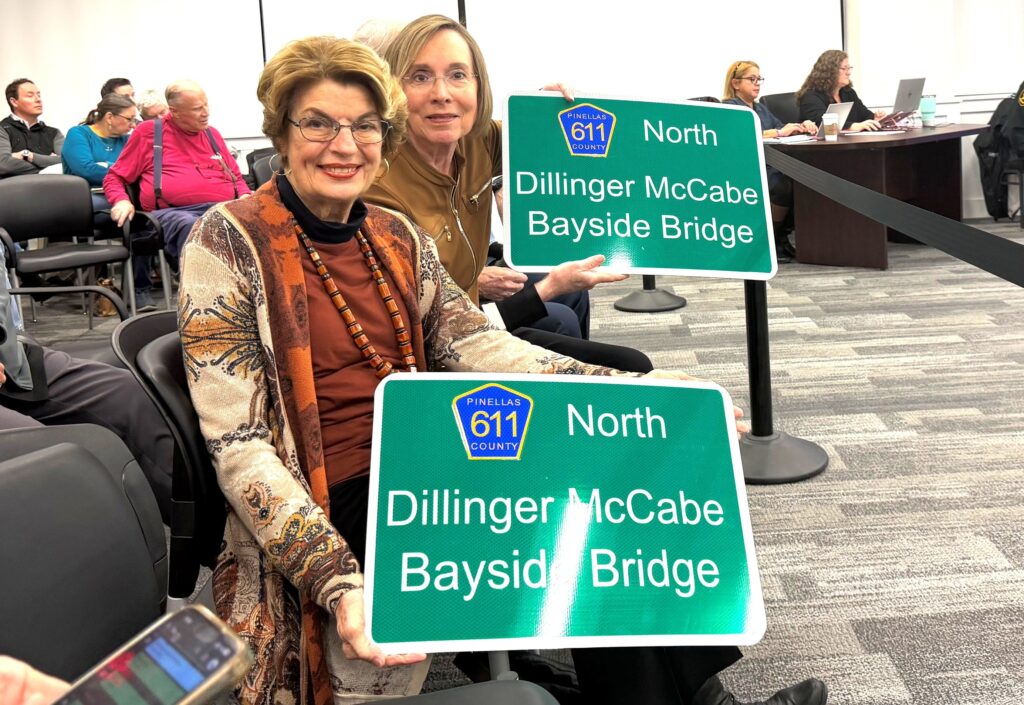
As we well know and the Times reported, “Kay Dillinger maintains a close friendship with McCabe’s wife, Denise, who stood alongside her Tuesday morning for the announcement of the bridge’s renaming. The most touching moment was when the commissioners handed them a miniature version of the road sign that will appear on the bridge, said Denise McCabe.” 

And their husbands’ legacies live on through their continued involvement with our Legacy Board and the award named in their husbands’ honor. We will be reminded of them again as we review the candidates for this recognition that arrive when JWB calls for nominations later this summer–and any time we drive across the Dillinger McCabe Bayside Bridge.

As Mr. Mikurak stated in JWB’s letter of support: “Their legacy is not only worthy of remembrance – it is worthy of a lasting, visible symbol that speaks to generations to come about the power of putting children first!”

New Digital Ecosystem Guidance Released for Parents

Children have more access to digital technologies than ever before. From smartphones to tablets, young people are using devices to engage on social media, play games and explore the world around them. 

According to an American Academy of Pediatrics (AAP) guidance published Jan. 20, limiting screen time is not sufficient. Caregivers need to take a more active approach and oversee their children’s digital activity. 

“Regardless of the amount of time our kids are on screens, if they are not appropriate consumers of the information that they are taking in or we are not teaching them how to appropriately engage with others on social media,” said Johns Hopkins All Children’s Hospital director of psychology and neuropsychology Jennifer Katzenstein, “then we are going to continue to have issues especially as it relates to mental health.” 

She explained that too much or too little time on social media platforms, especially for girls, has led to increased rates of depression and suicidal thoughts. “So, there is really this sweet spot in the middle when it comes to social media use and it differs for every kid.” 

Video games can also have a negative impact on children, Katzenstein said. Playing high violence titles like Call of Duty and Grand Theft Auto can lead to “more violent tendencies and disruptive behavior.” 

Even the nightly news can affect young people. She explained that it is important for parents to talk to their sons and daughters about “what’s happened, what they might have seen and process it together.” 

Consumption of media is not the only issue. Adolescents are able to communicate with strangers via social platforms and games. 

The Juvenile Welfare Board of Pinellas County in partnership with the Pinellas County Sheriff’s Office launched an initiative in December to help combat cybercrimes and human trafficking. 

Parents, caregivers and concerned citizens are able to sign up for a free annual membership to Parent ProTech – a platform that provides educational resources about modern technologies. 

Juvenile Welfare Board interim CEO Michael Mikurak explained in a Catalyze 2026 interview that there are approximately 800,000 registered sex offenders in the country. About 2,000 of them live in Pinellas. 

Katzenstein said that it’s essential that caregivers know who their children are talking to. Additionally, they should monitor all devices and understand every app and how it works. 

More importantly, guardians can establish rules – such as do not communicate with anyone you do not know in real life, and do not give out any personal information. 

Katzenstein recommends that families sit down and discuss screen time parameters and expectations. Parents can find media use plans online to help. 

She additionally suggests that caregivers store and charge devices outside of the bedroom to help prevent sleeplessness and distraction at nighttime. It’s also another layer of protection. 

Guardians could consider spending more time with their children outside the home, she said, to help decrease screen time and negative mental health impacts. 

The digital ecosystem can have a positive impact as well. Certain content can encourage learning and development, according to the new AAP guidance. 

Read the article as originally published at https://stpetecatalyst.com/new-digital-ecosystem-guidance-released-for-parents/

County Renames Bayside Bridge After Iconic Local Attorneys

Pinellas County commissioners voted Tuesday to rename the Bayside Bridge after Bob Dillinger and Bernie McCabe. Dillinger served six terms as the Pinellas-Pasco public defender. McCabe was a long-time state attorney, and the two spent decades working together on the Juvenile Welfare Board. Commissioner Chris Latvala spearheaded efforts to rename the bridge the Dillinger McCabe Bayside Bridge. McCabe and Dillinger died in 2021 and 2024, respectively.

Read the article as originally published at https://stpetecatalyst.com/zaps/county-renames-bayside-bridge-after-iconic-local-attorneys/